Two sides of one bracket
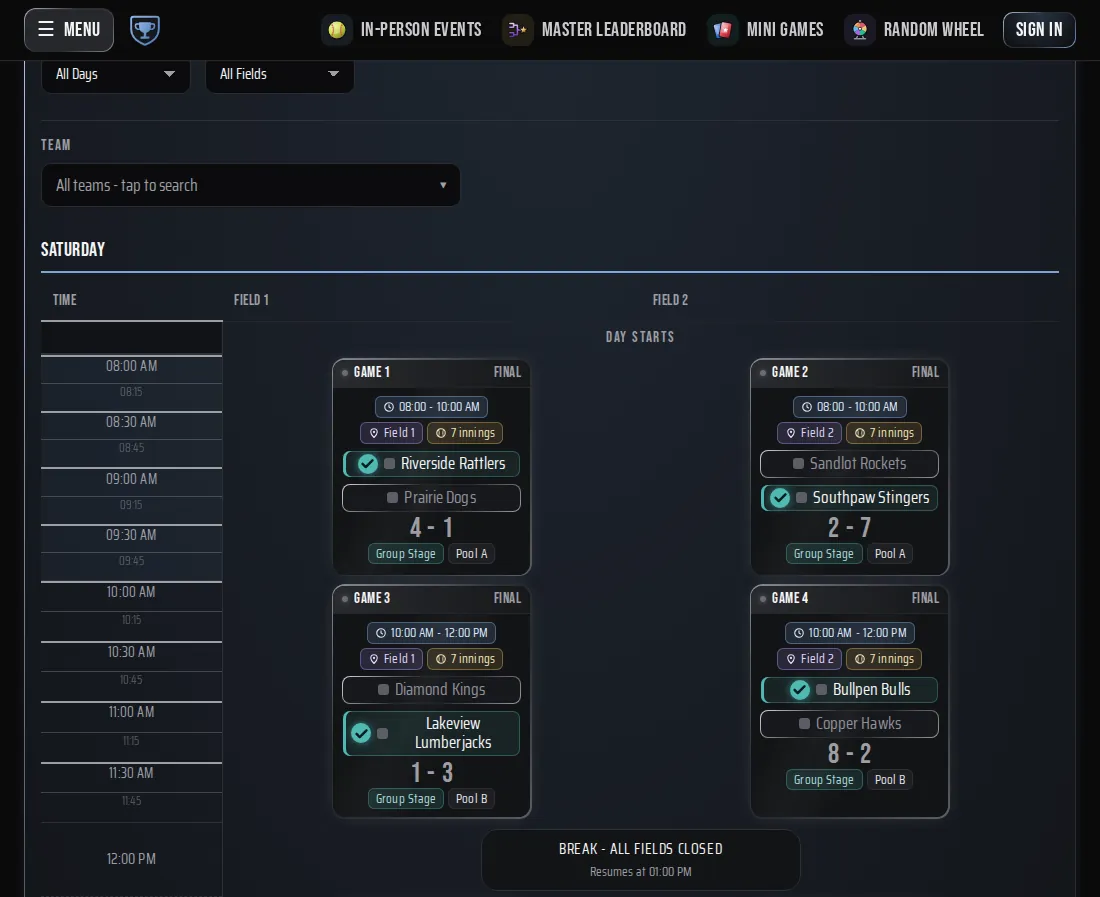
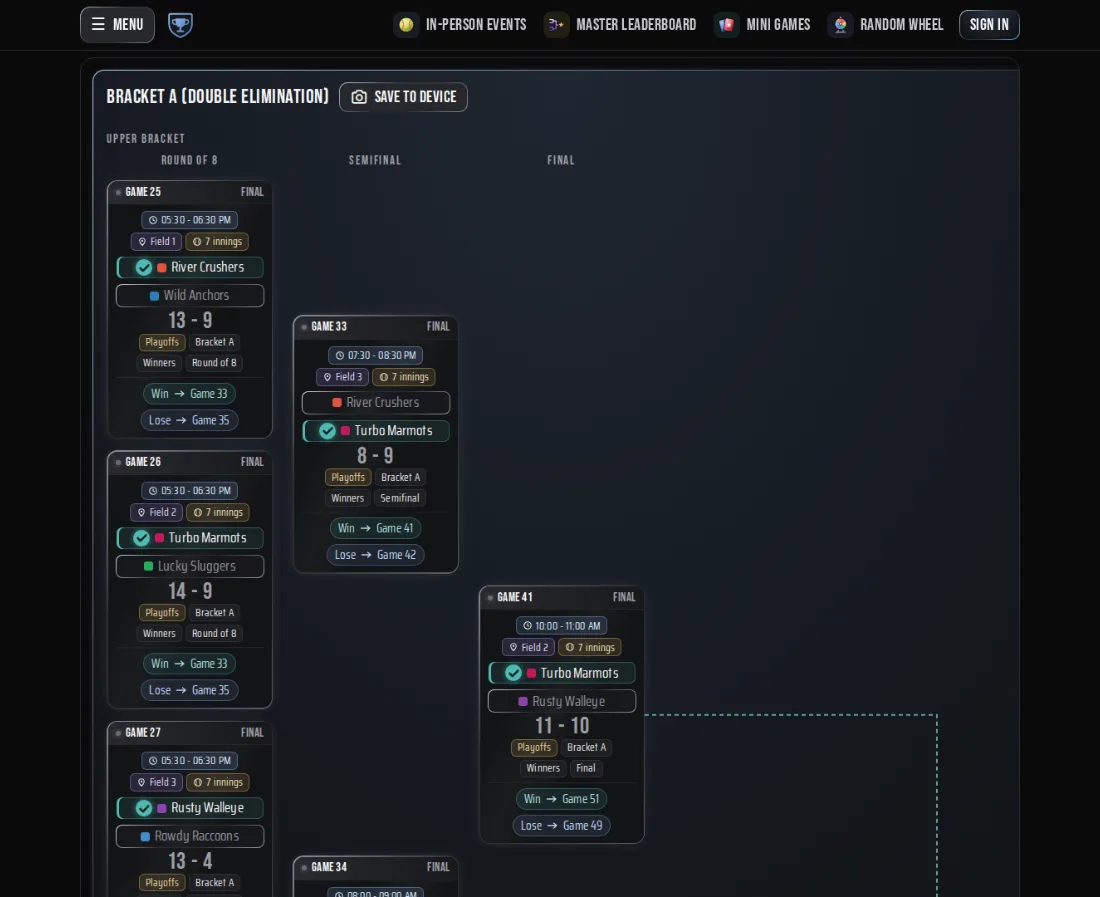
A double elimination bracket has a winners side and a losers side. Every team starts on the winners side. Lose once and you drop to the losers side. Lose on the losers side and you are out.
The team that wins the winners side has never lost. The team that wins the losers side has lost exactly once. Those two meet in the final.
The if-necessary game
If the winners side champion wins the final, it is over: the other team now has two losses. If the losers side champion wins, both teams have one loss each, so a second game decides the title. That second game is called the if-necessary game.
Schedule a slot for it even though it may not be played. If it is not needed, the field simply frees up early.
How many games it takes
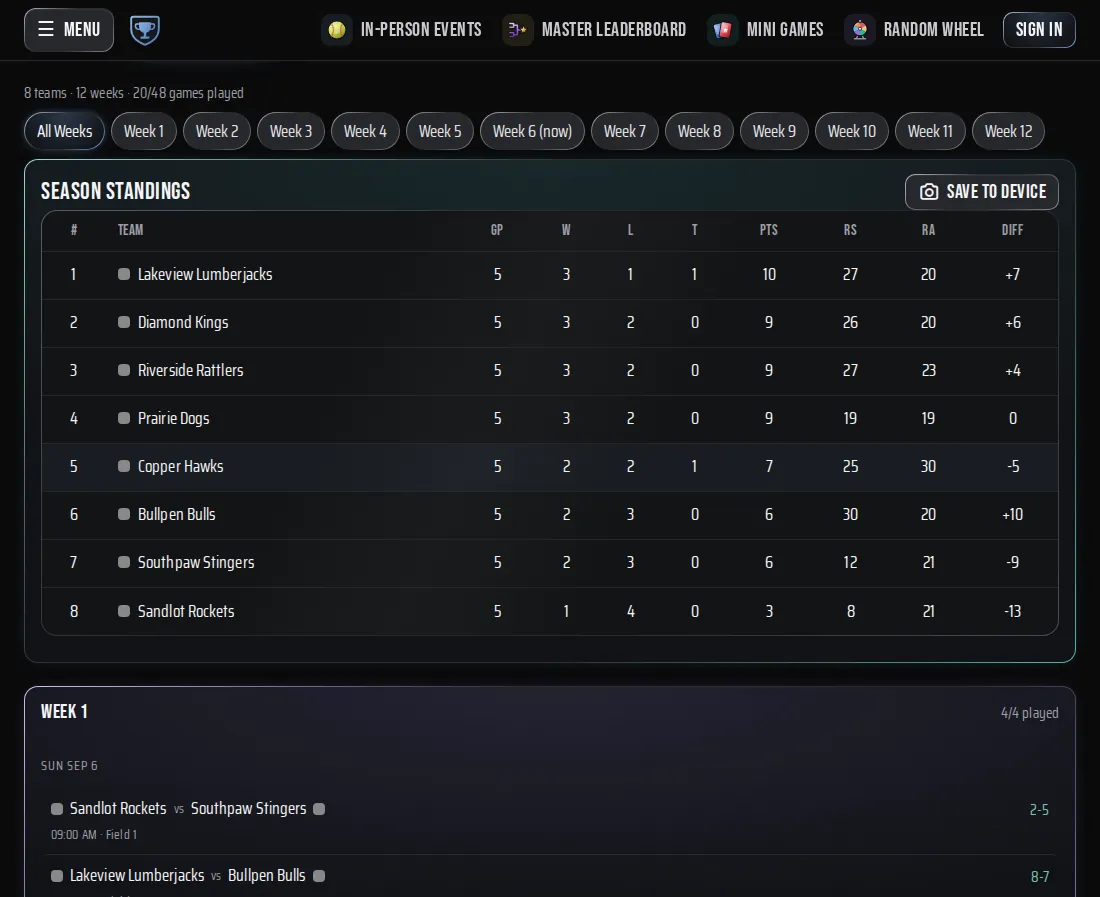
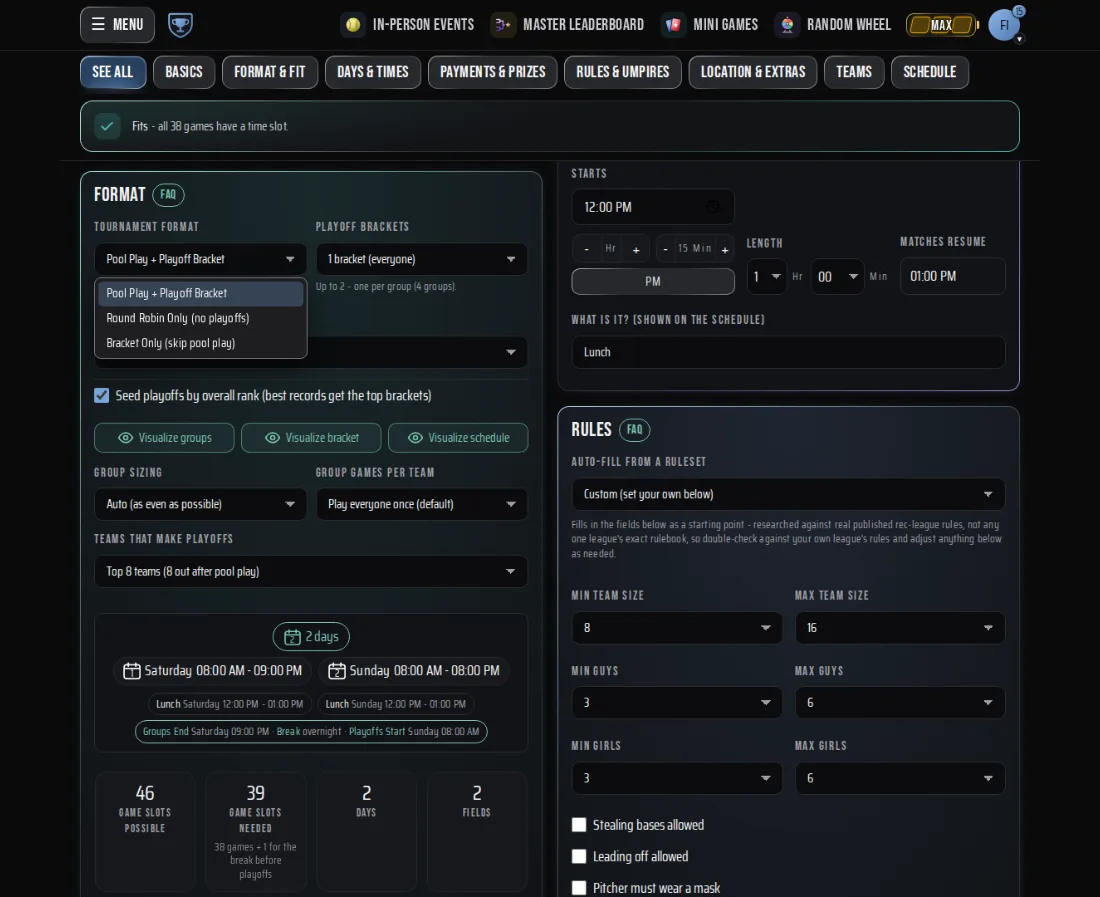
A double elimination bracket for N teams takes 2N minus 2 games, or 2N minus 1 if the if-necessary game is played. Eight teams need 14 or 15 games, against 7 for single elimination. That is roughly twice the field time, so check your slots before you promise it.
Where losers drop
A team that loses in the winners side drops into a set spot on the losers side, usually against a team that has already lost once. Good brackets cross these drops over, so two teams that just played each other do not meet again straight away.
When to use it
- You have the field time: double elimination roughly doubles the playoff games.
- Teams have travelled and expect to play more than one playoff game.
- One bad inning should not end a weekend.
If time is short, pool play into a single elimination bracket guarantees games another way. See Softball Tournament Formats Explained.