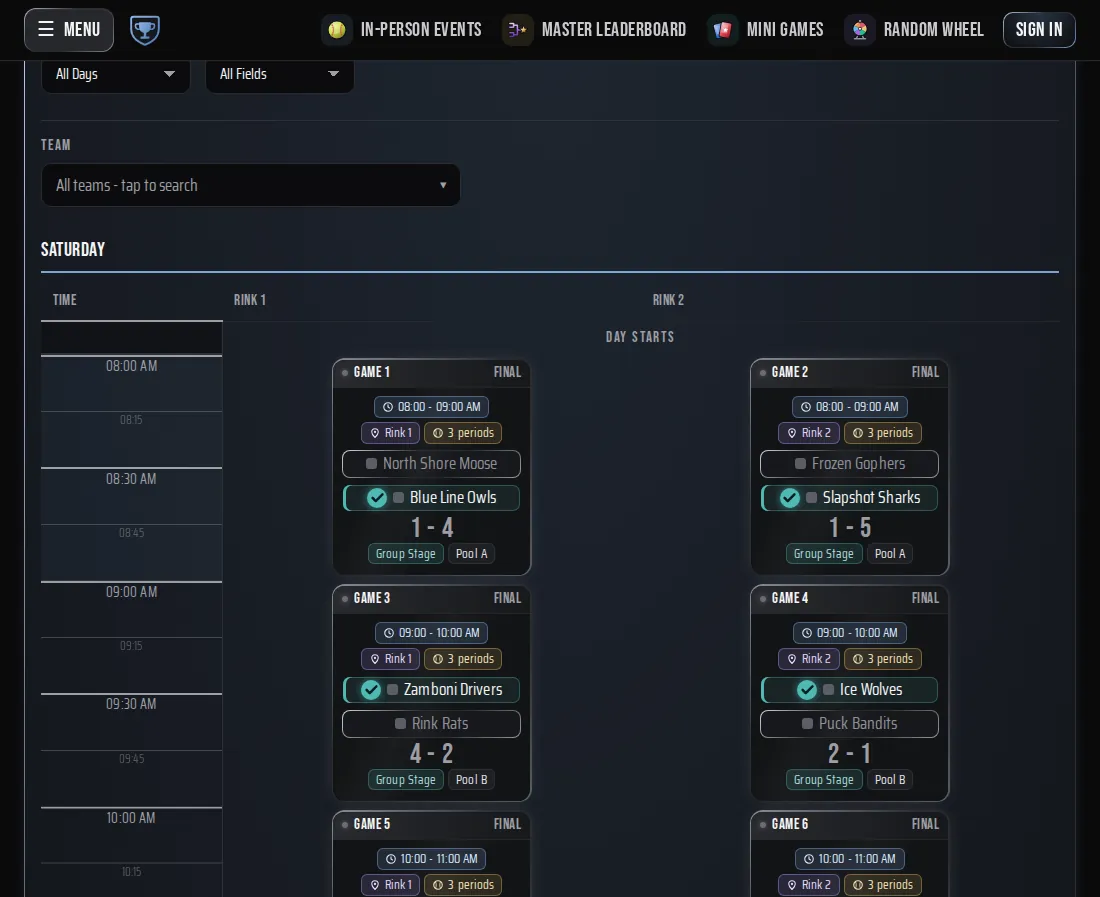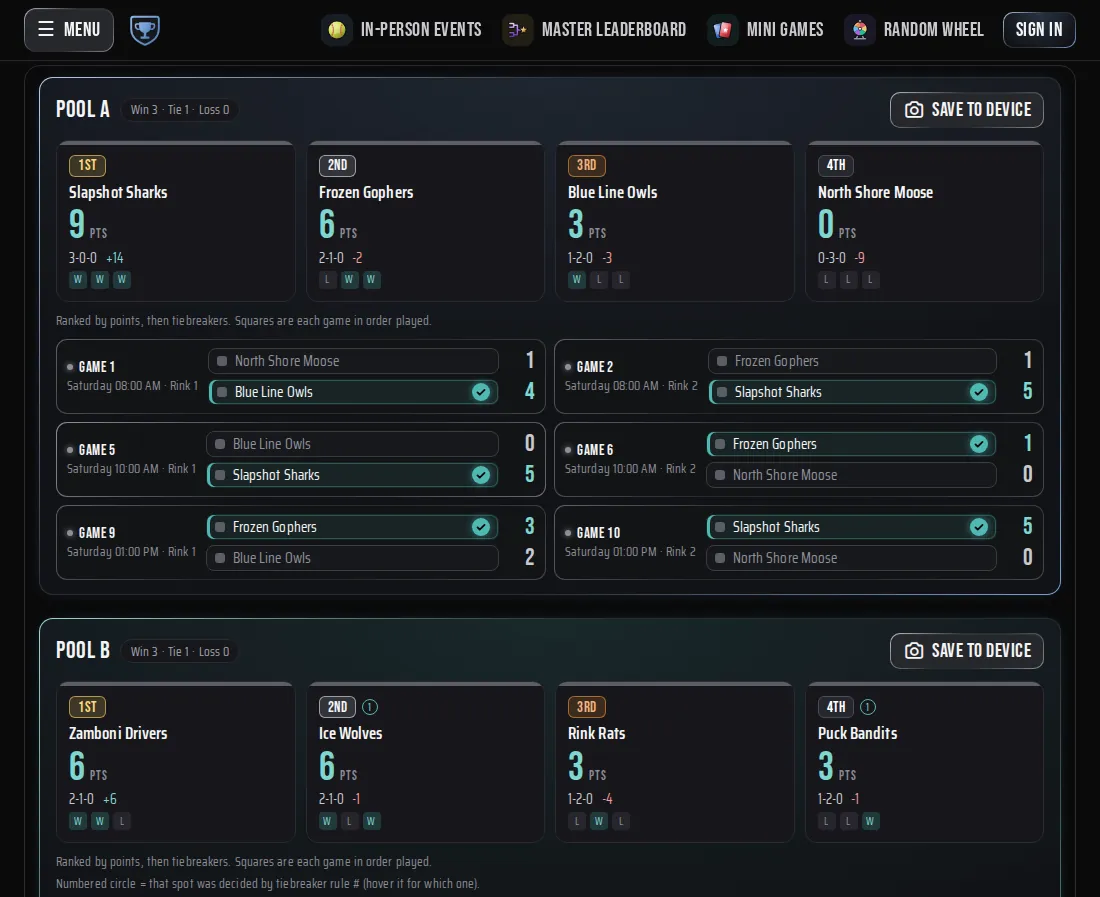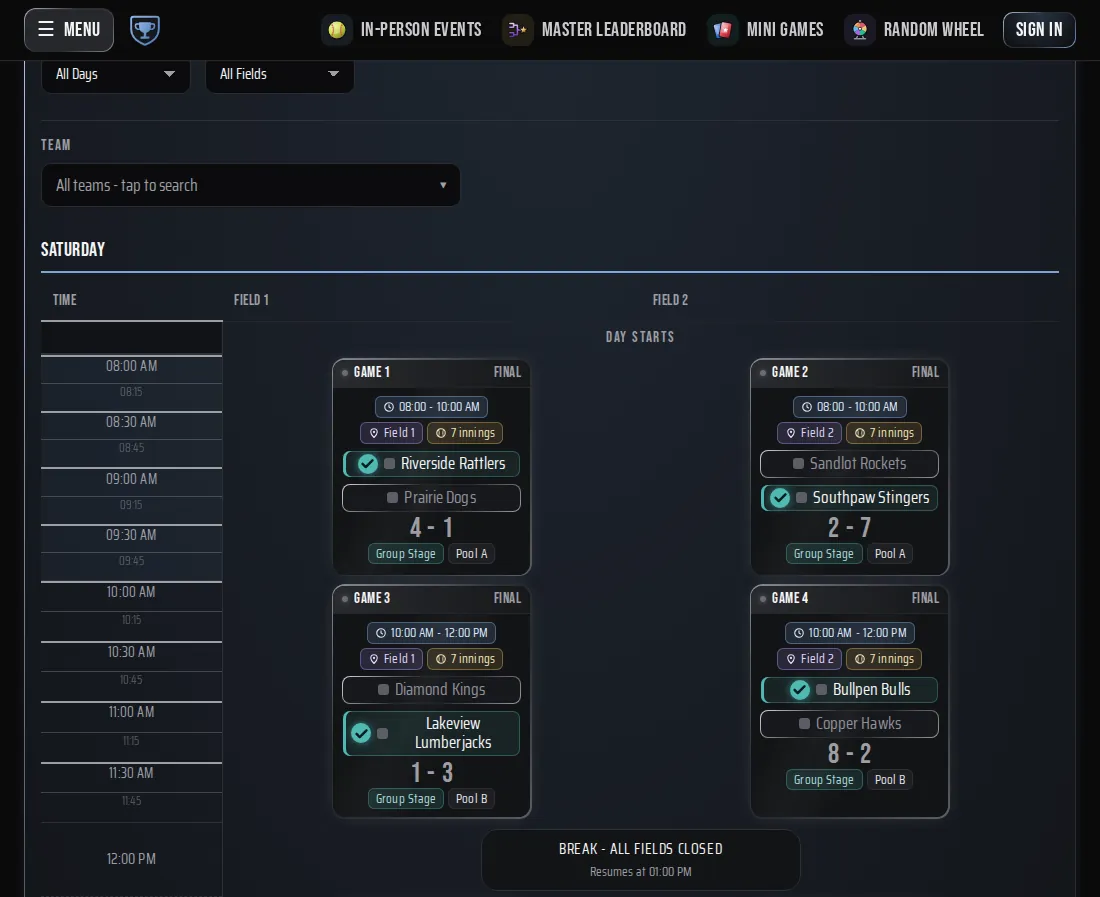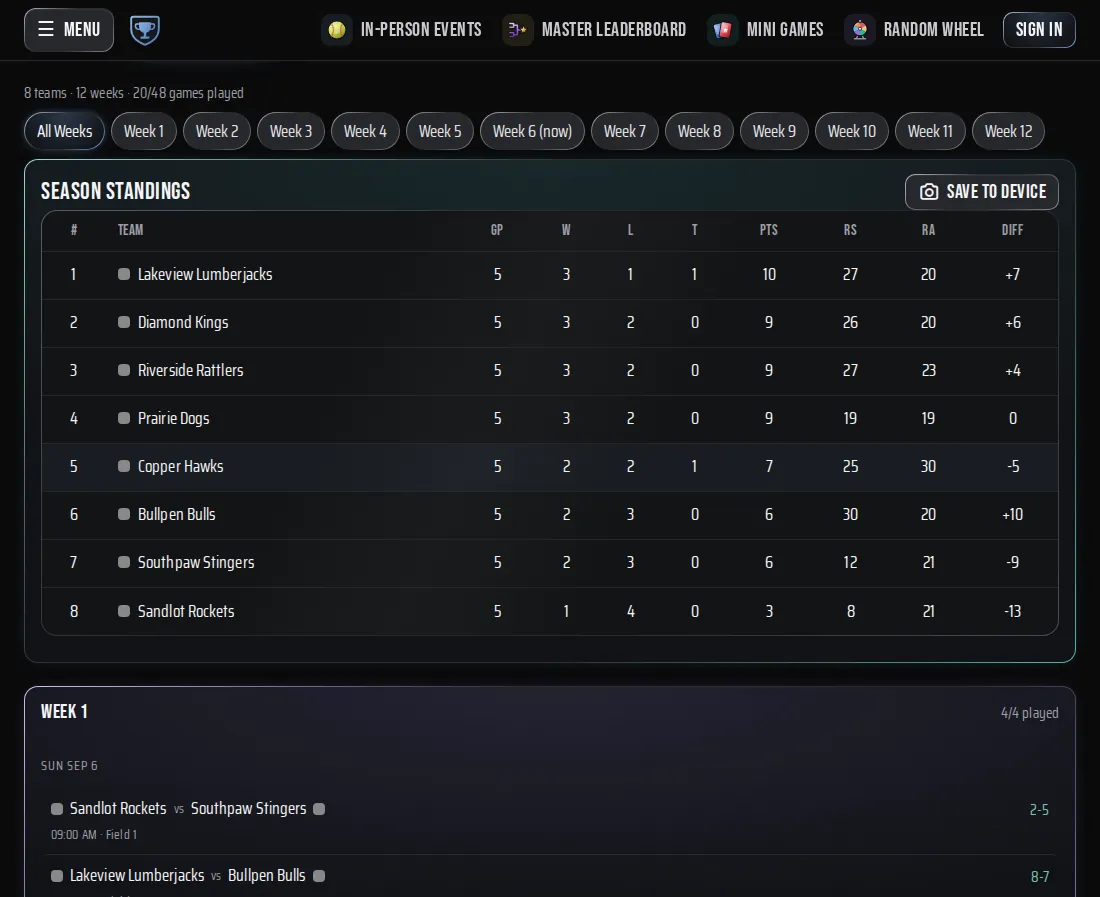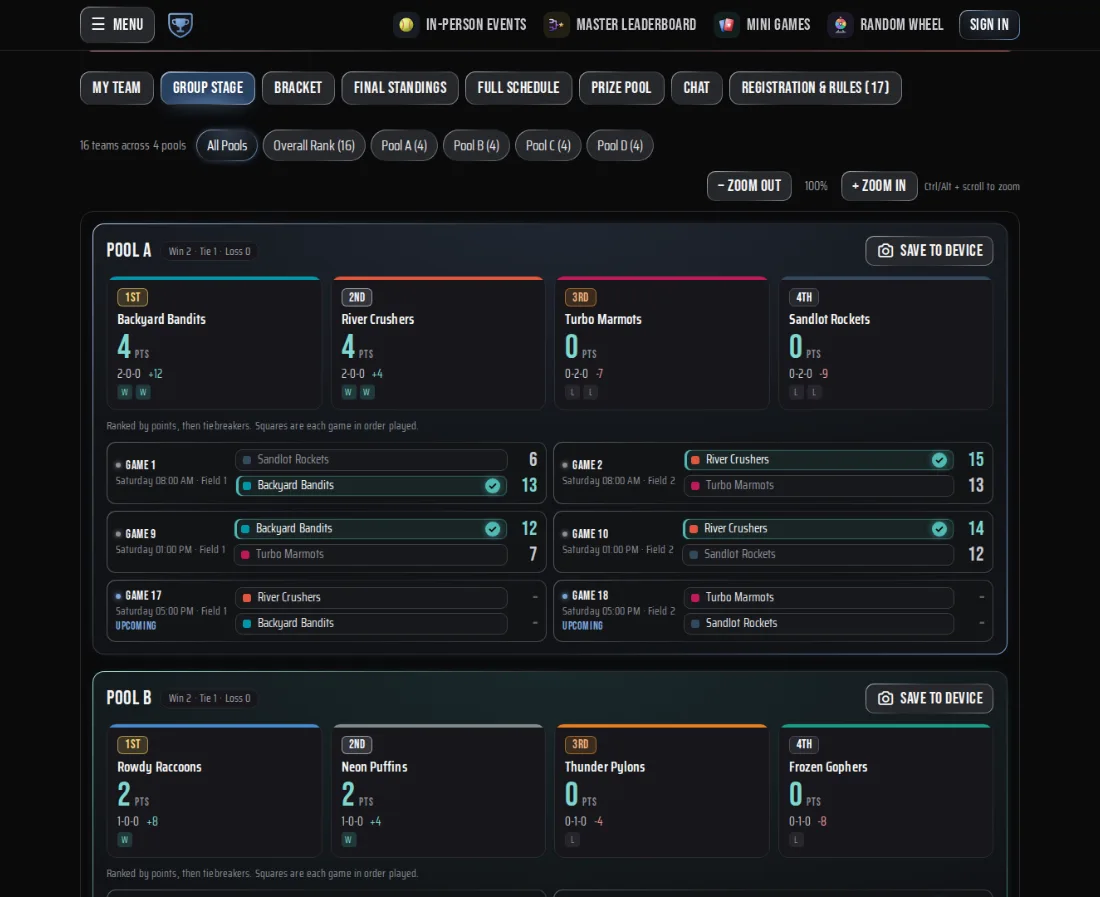
What pool play is
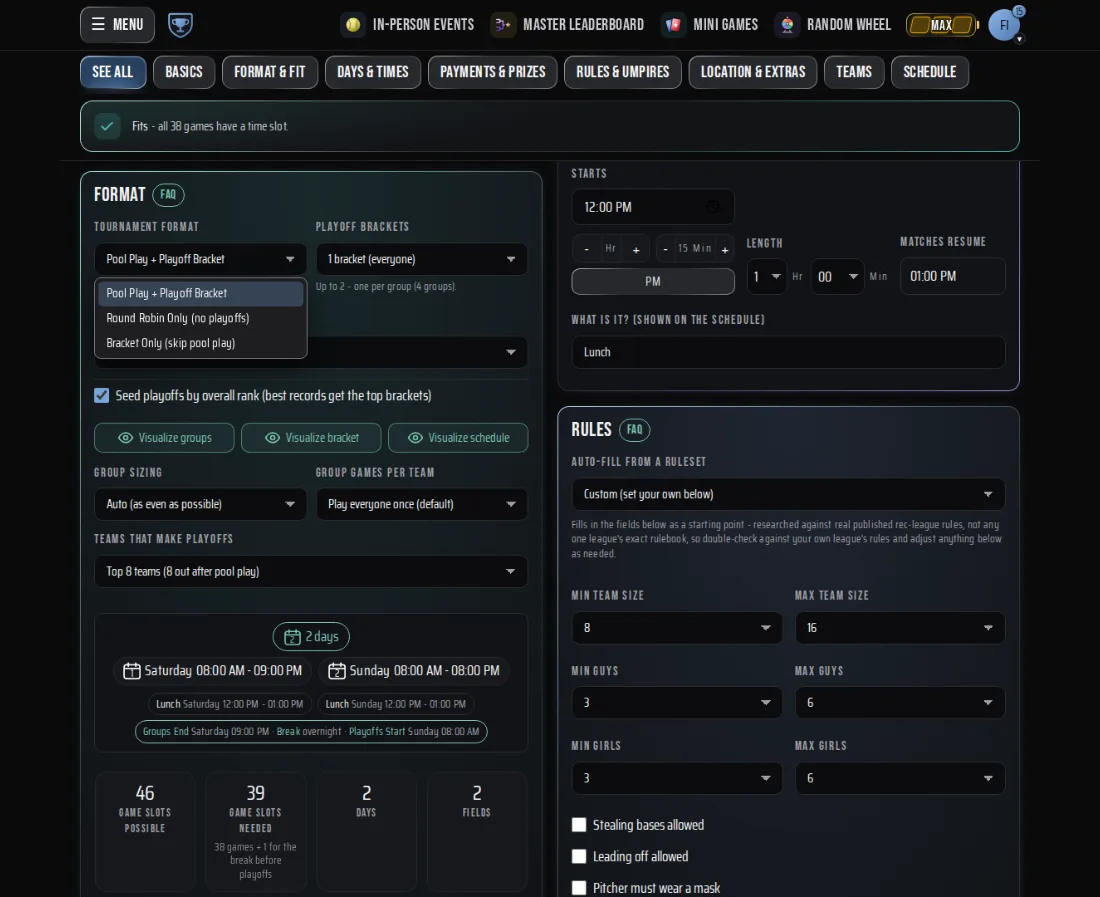
Teams are split into small groups called pools. Inside each pool every team plays every other team once, which is a round robin. When pool play ends, the standings decide who goes where in the playoffs.
Games per pool size
A pool of N teams needs N times N minus 1, divided by 2, games.
- Pool of 3: 3 games, 2 per team.
- Pool of 4: 6 games, 3 per team.
- Pool of 5: 10 games, 4 per team.
- Pool of 6: 15 games, 5 per team.
Pools of 4 are the most common because they give every team 3 games before the playoffs without needing many fields.
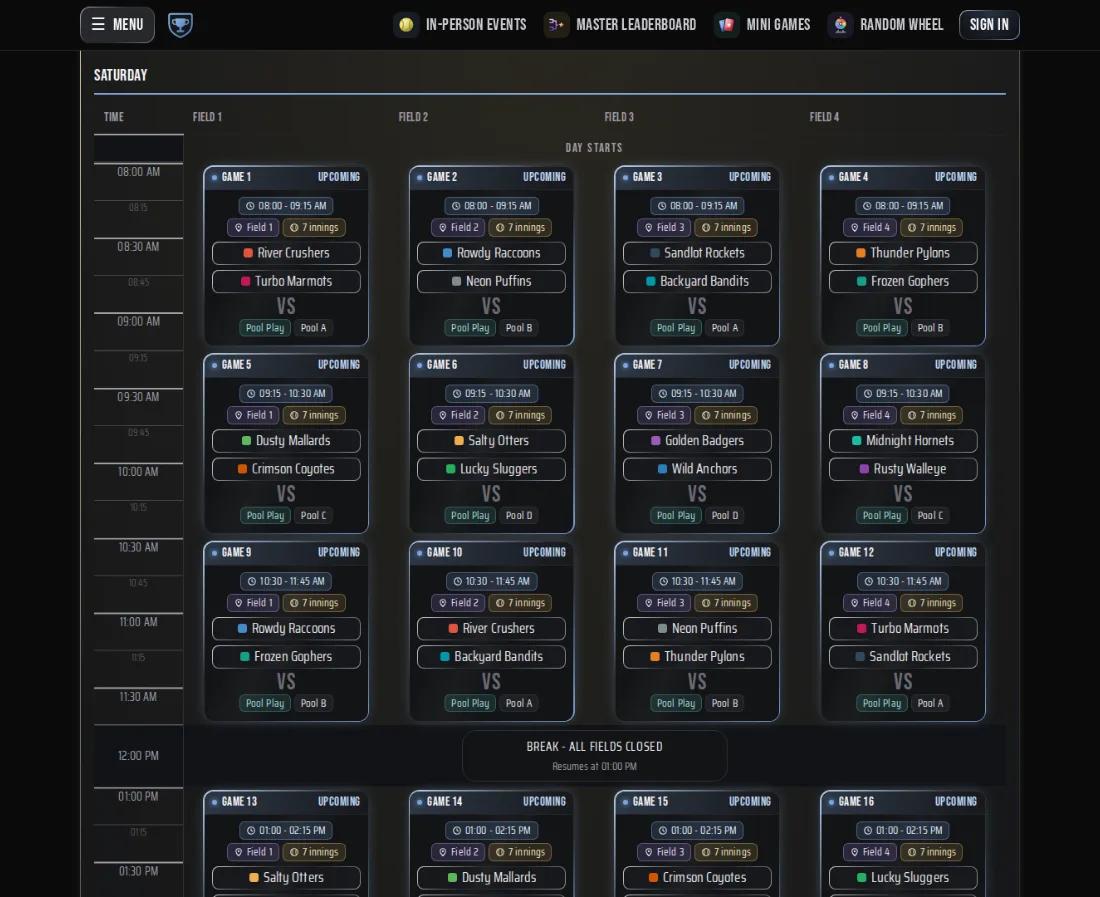
When teams do not divide evenly
With 10 teams you might run two pools of 5, or a pool of 4 and two pools of 3. Uneven pools mean teams play different numbers of games, so compare across pools fairly: on points per game or run differential per game rather than raw totals.
Balancing the pools
If you know which teams are strong, spread them out: put the four strongest teams in four different pools, then the next four, and so on. This is called snake seeding and stops one pool from being much harder than the others.
From pools to playoffs
When the last pool game ends, apply your tiebreakers and seed the bracket. See How to Seed a Playoff Bracket and Softball Tiebreakers Explained.