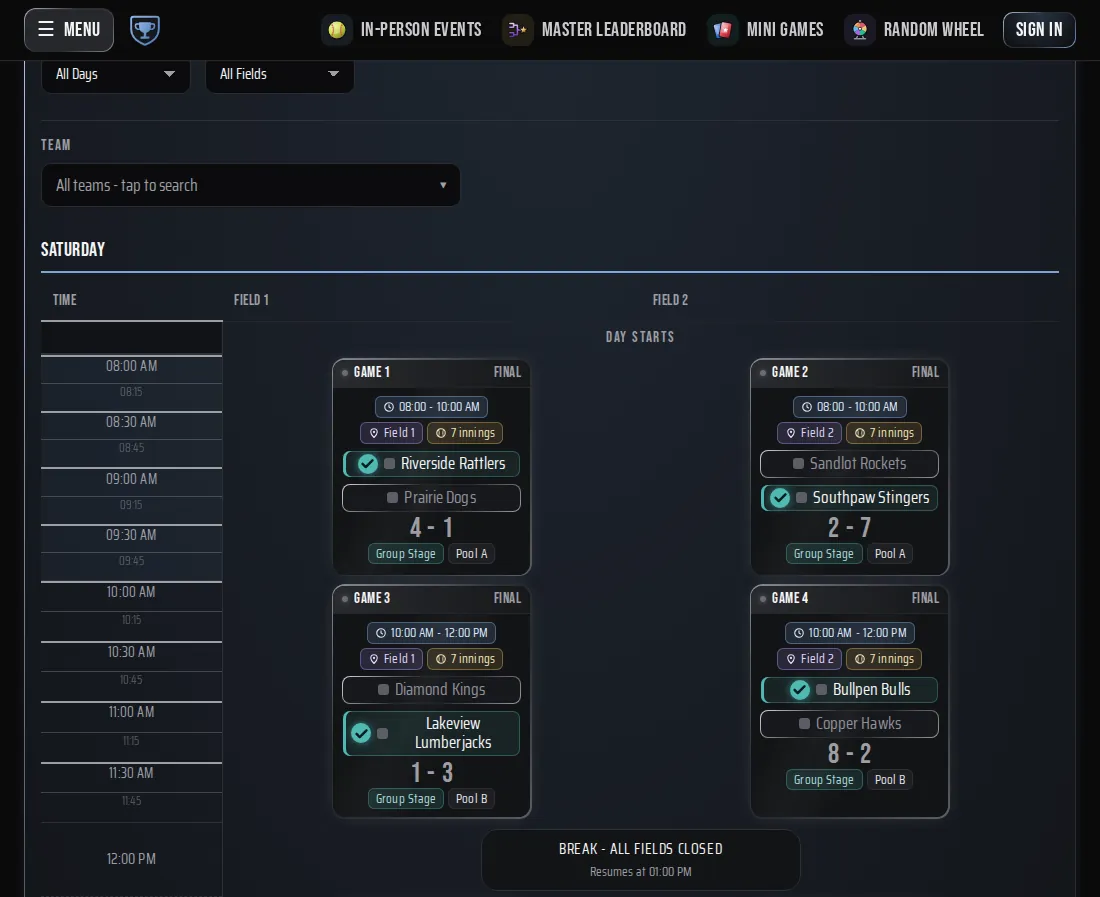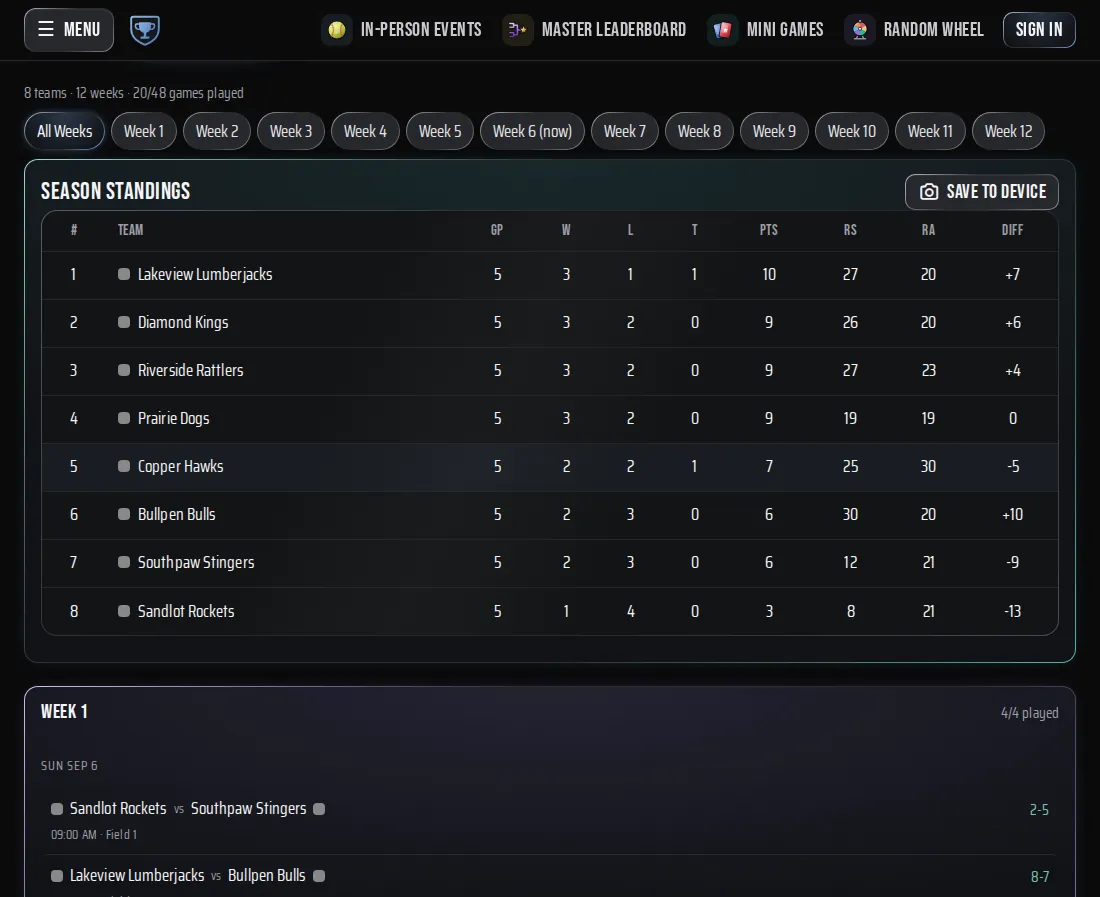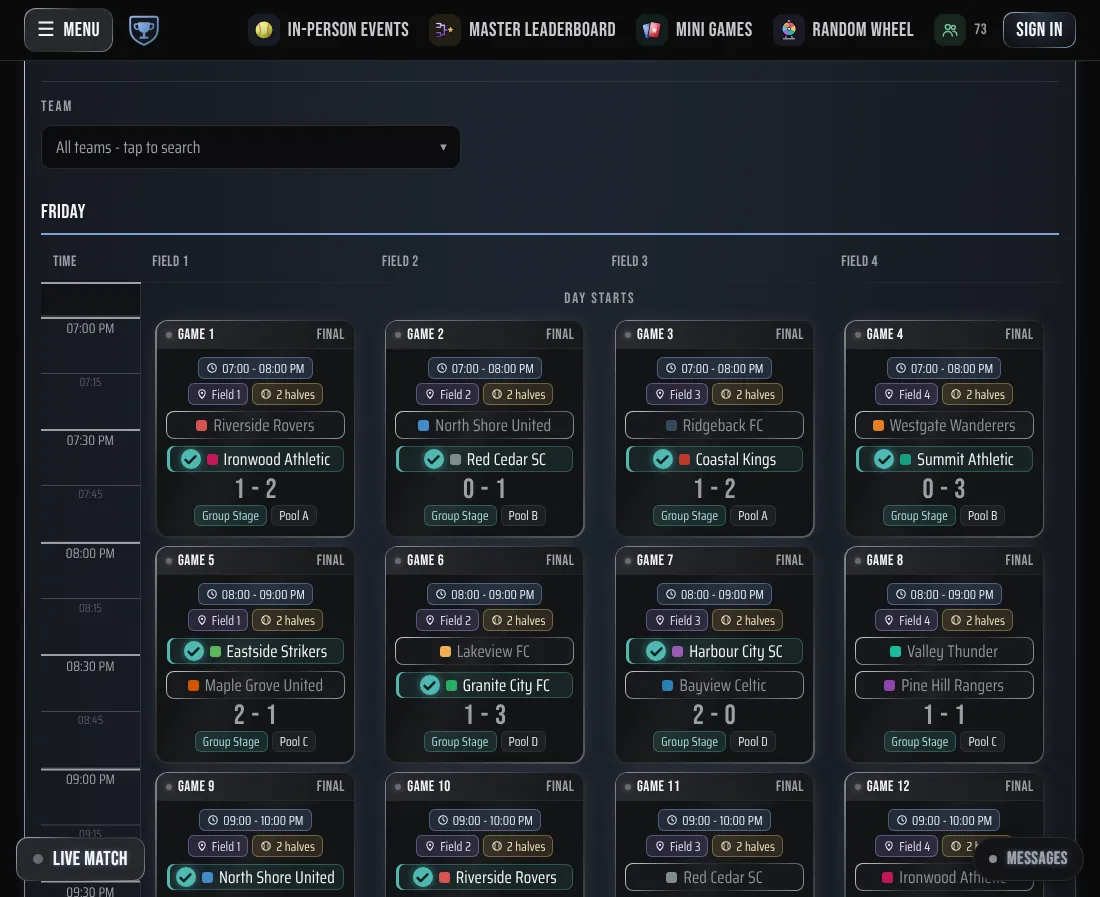
Start with the fields and the hours you have
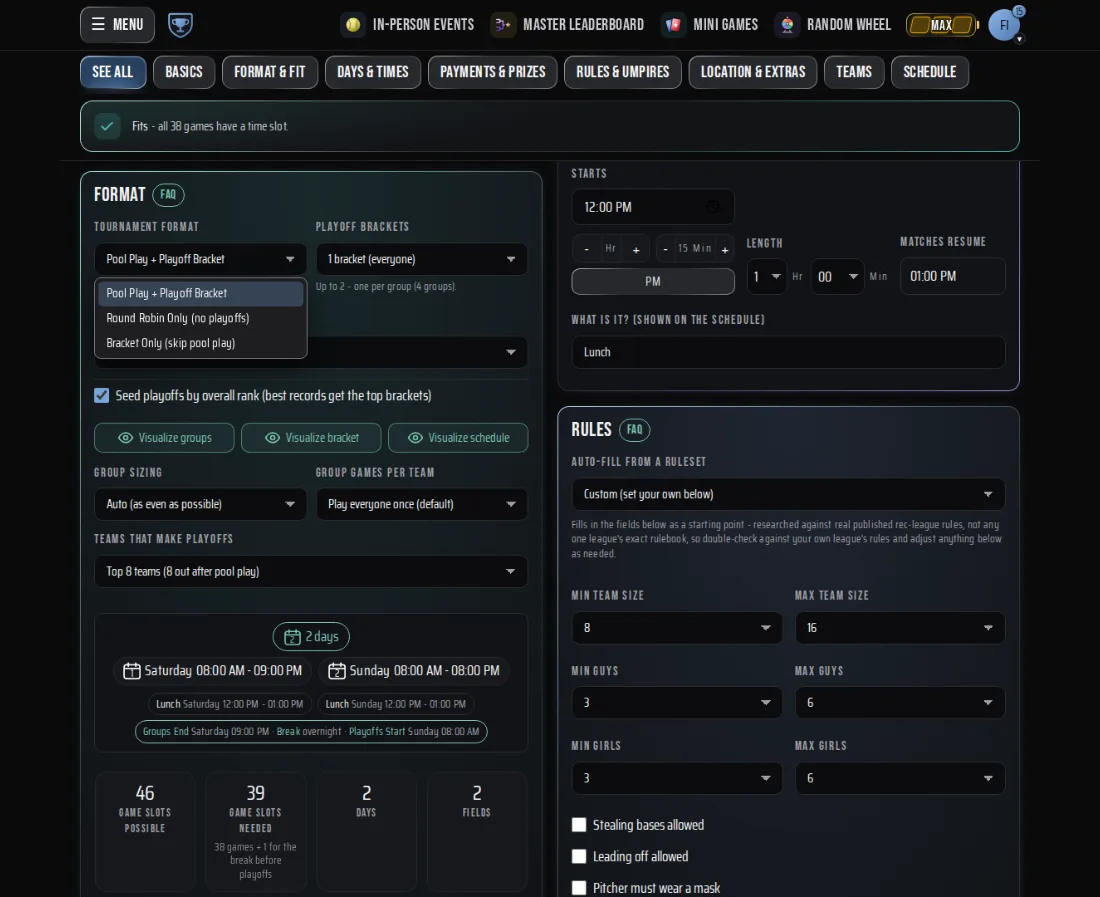
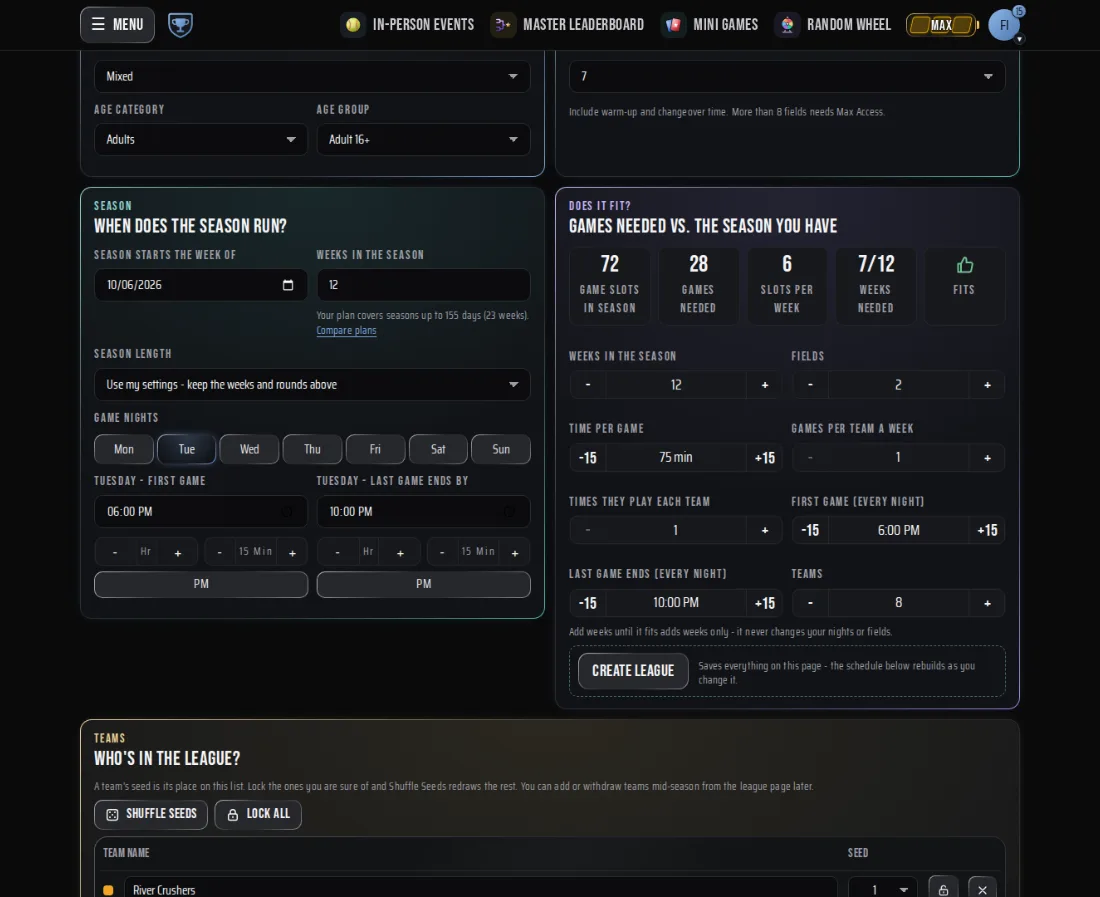
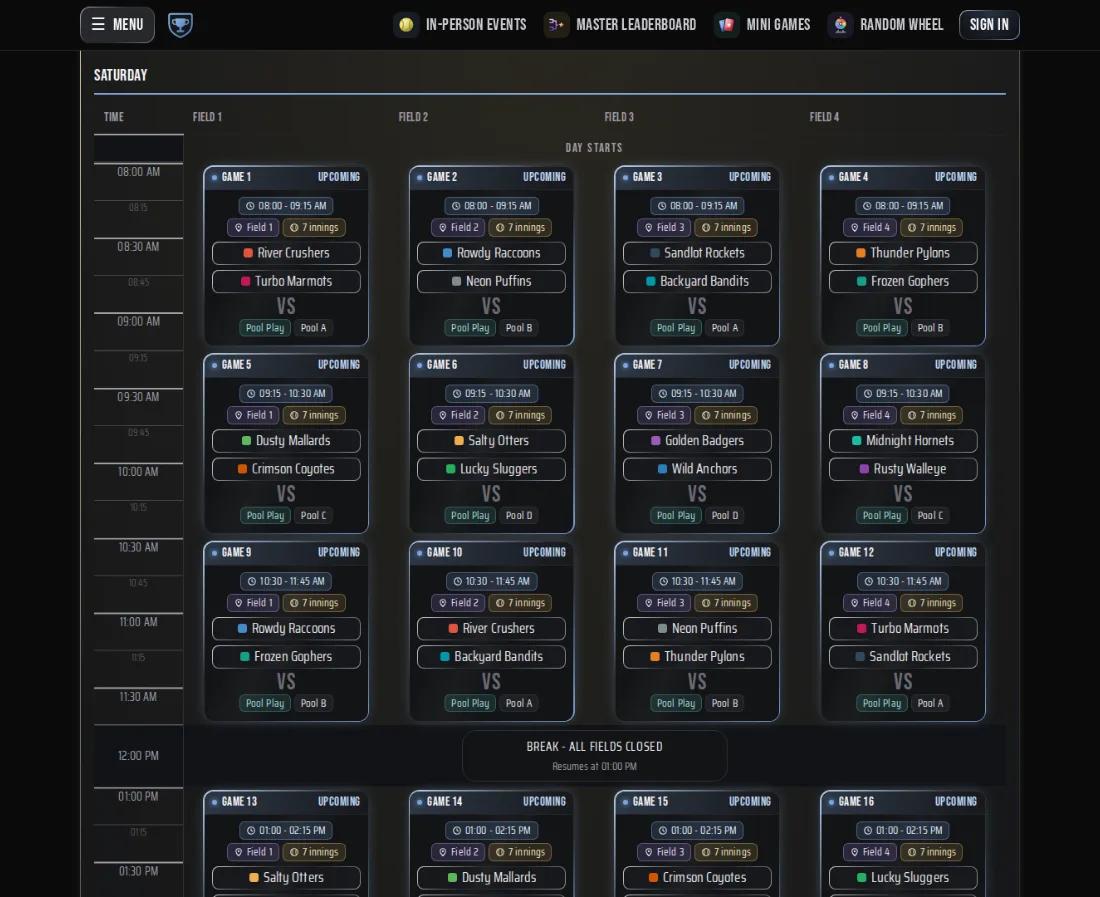
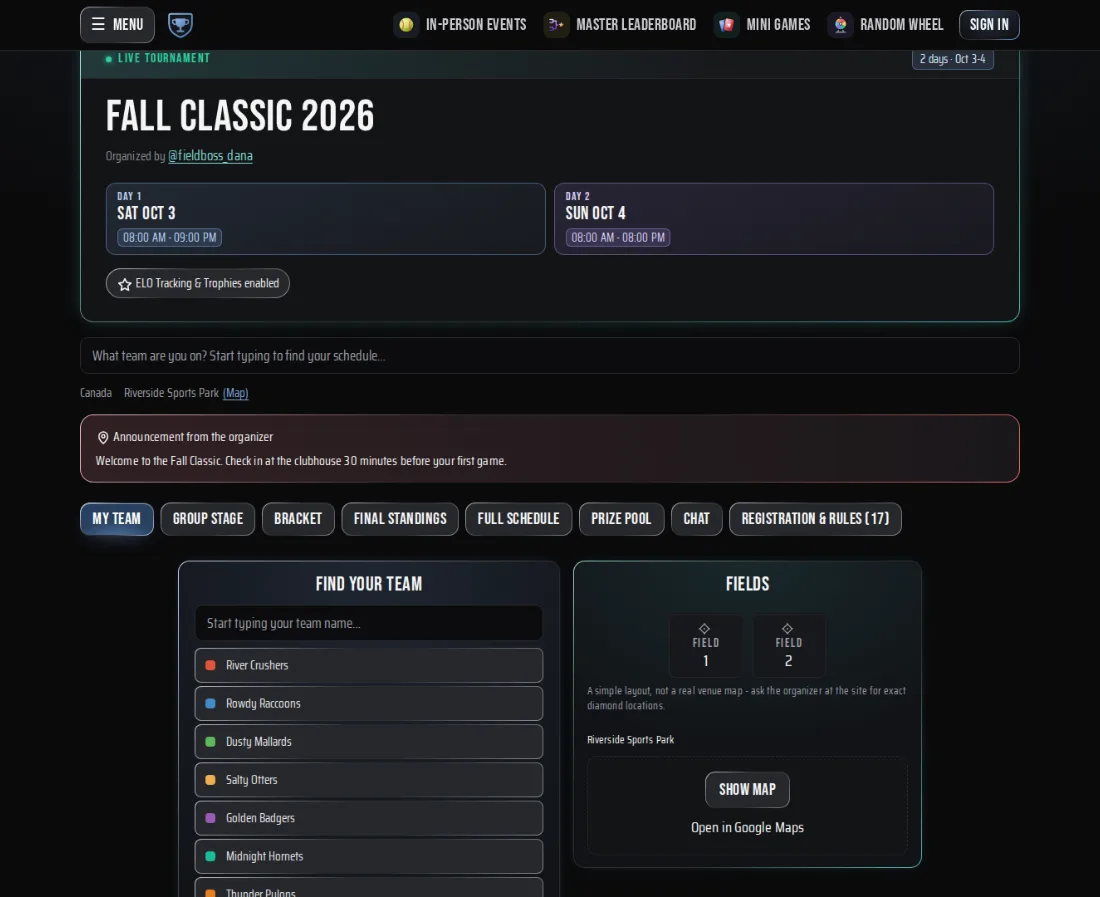
Write down how many fields you have, which days, and the first and last kickoff on each day. A full-size field can often be split in two for small-sided youth games, and each half counts as its own field in the schedule.
Game length depends on age. Common tournament halves are 20 minutes for under 8 and under 10, 25 to 30 minutes for under 12 to under 14, and 30 to 35 minutes for older youth and adults. Add a short half-time and a few minutes to clear the field, and most games fit a 50 to 70 minute slot.
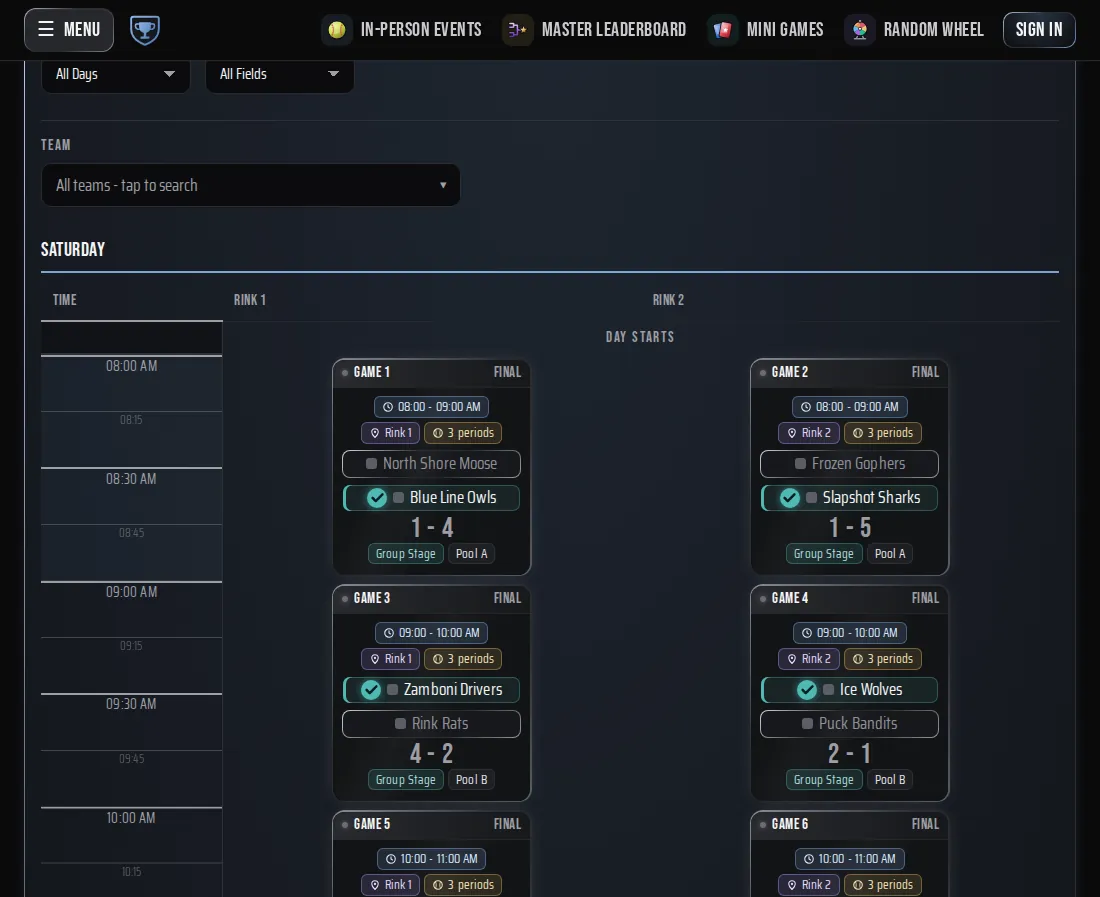
Three fields from 8 am to 6 pm at 60 minutes a game is 30 games a day.
Work out how many teams fit
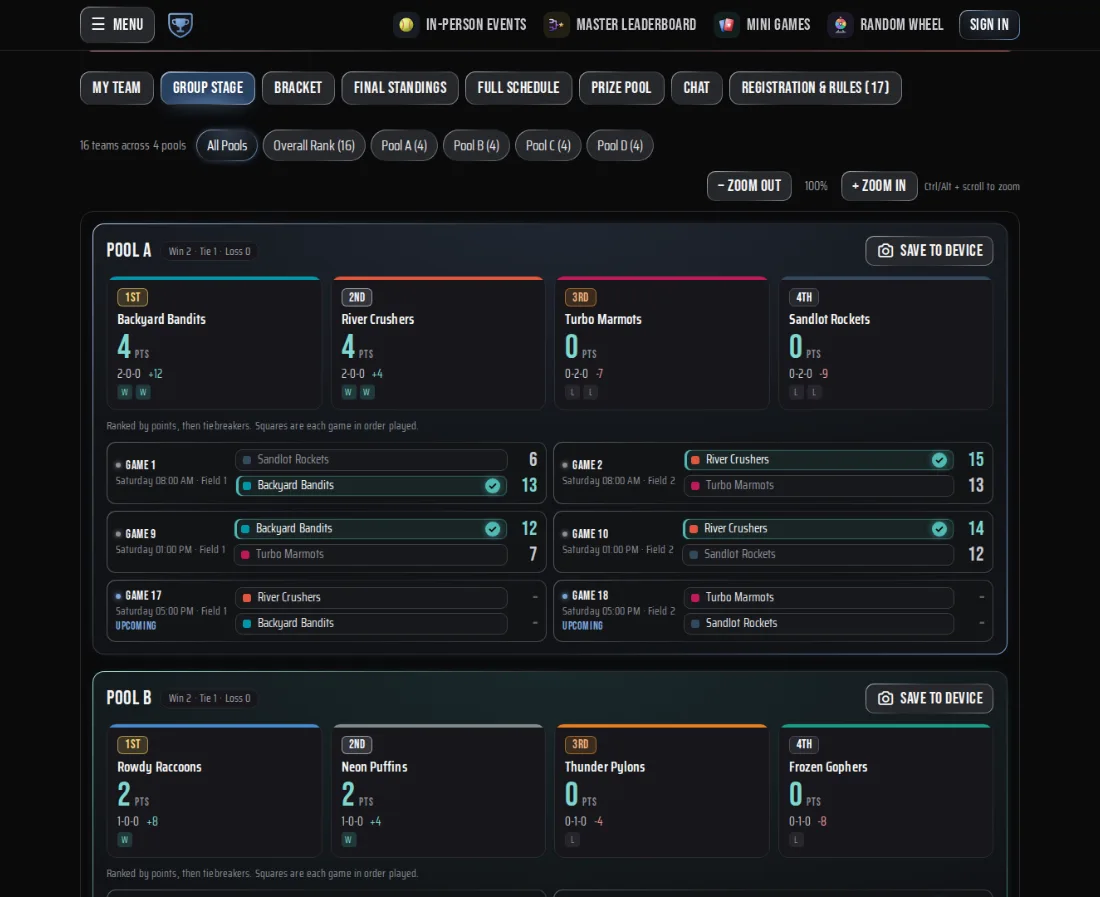
Teams expect a guaranteed number of games, usually 3 or 4. Groups of 4 give every team 3 group games before the knockouts.
- 8 teams: two groups of 4 and a 4 team knockout is 15 games, 12 in the groups, 2 semi-finals and a final.
- 12 teams: three groups of 4 and an 8 team knockout is 25 games.
- 16 teams: four groups of 4 and an 8 team knockout is 31 games.
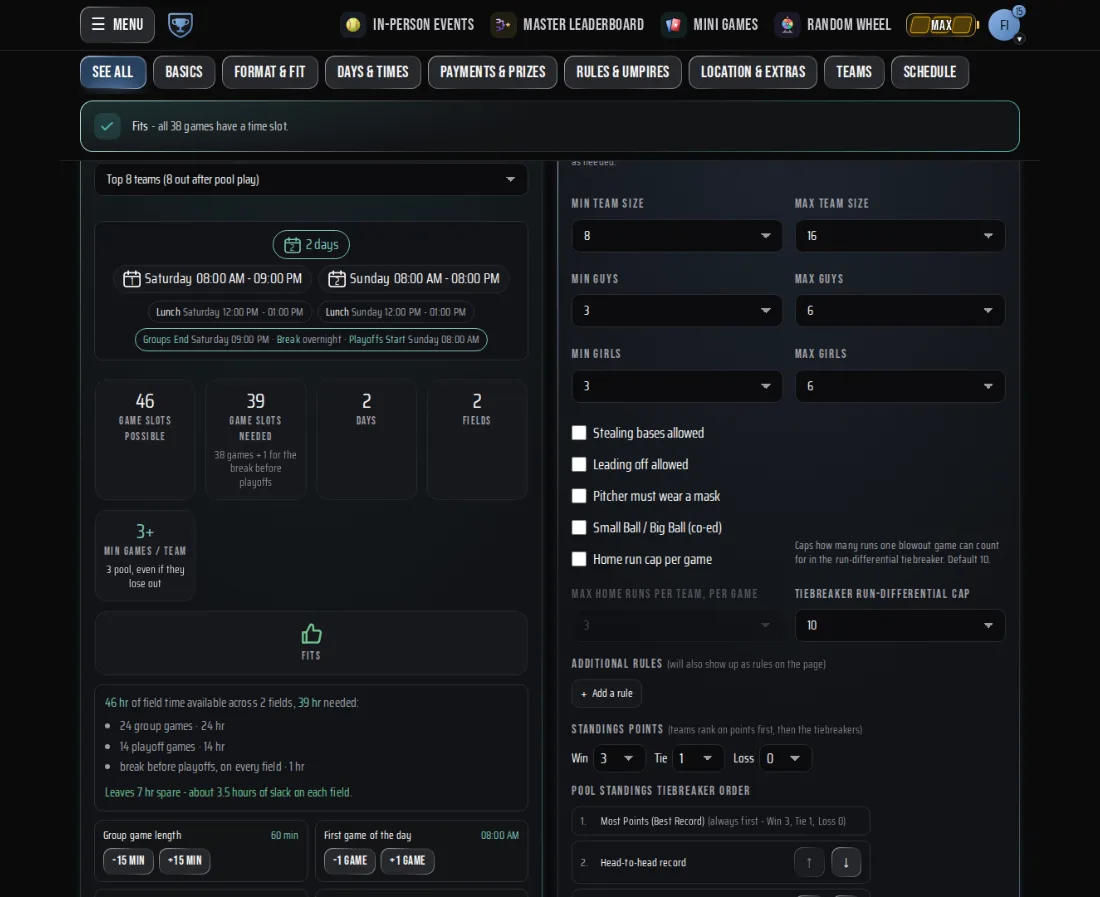
Compare that with your field time. 25 games at 60 minutes is 25 field hours: three fields for a little over 8 hours. Keep a slot or two spare for weather or a game that starts late.
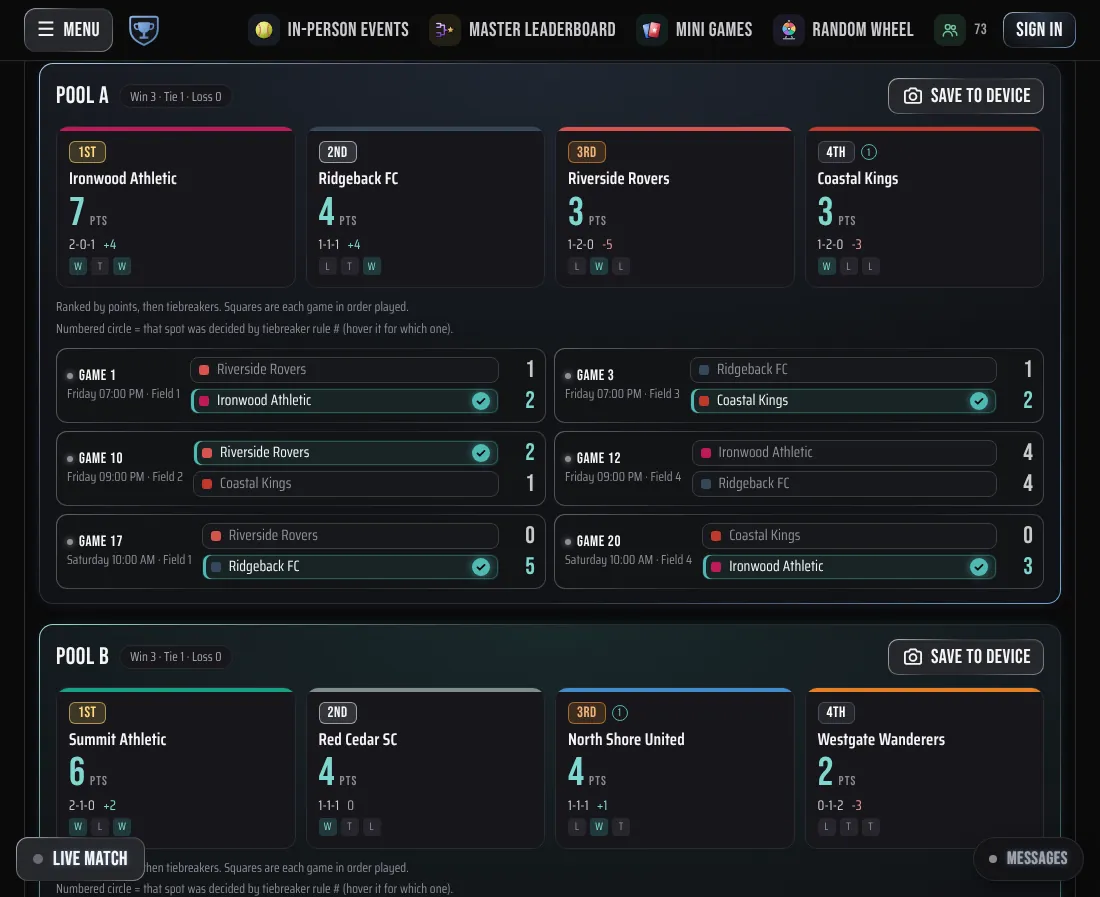
Pick a format
- Groups, then a knockout. The usual format. The group tables seed the knockout bracket.
- Round robin only. Everyone plays everyone and the table decides the winner. Works for 4 to 6 teams.
- Cup and plate. Split the knockout by group finish so teams that don't make the cup still play for a plate.
Group games can end in a draw, worth 1 point. Knockout games cannot, so decide now how a draw is settled: a short period of extra time, then penalty kicks. Many youth tournaments go straight to penalties to keep the schedule on time.
Write the rules down before anyone registers
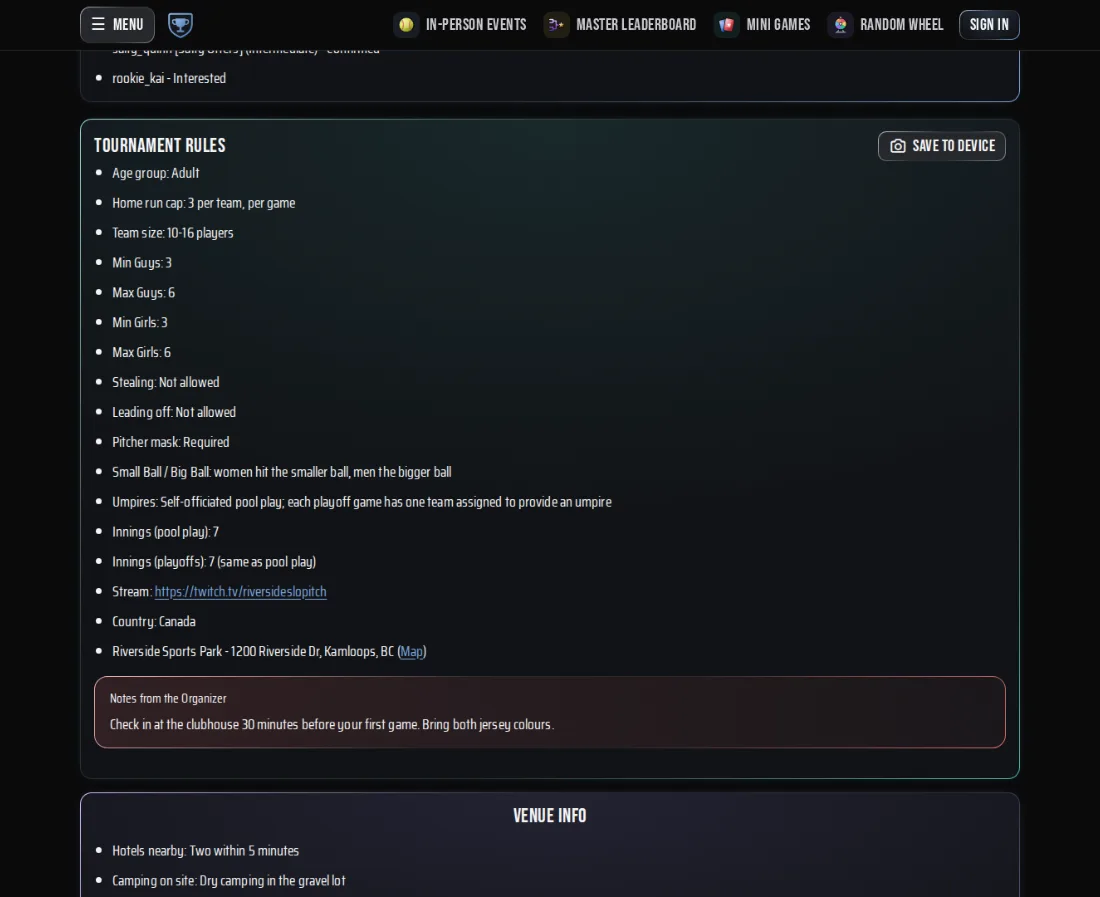
- Half length, half-time, and whether the clock stops.
- Substitutions: rolling, or only at stoppages with the referee's OK.
- Slide tackles, heading for younger age groups, and any mercy rule.
- Rosters: how many players, guest players, and player passes or ID checks.
- Cards: what a red card means for the next game.
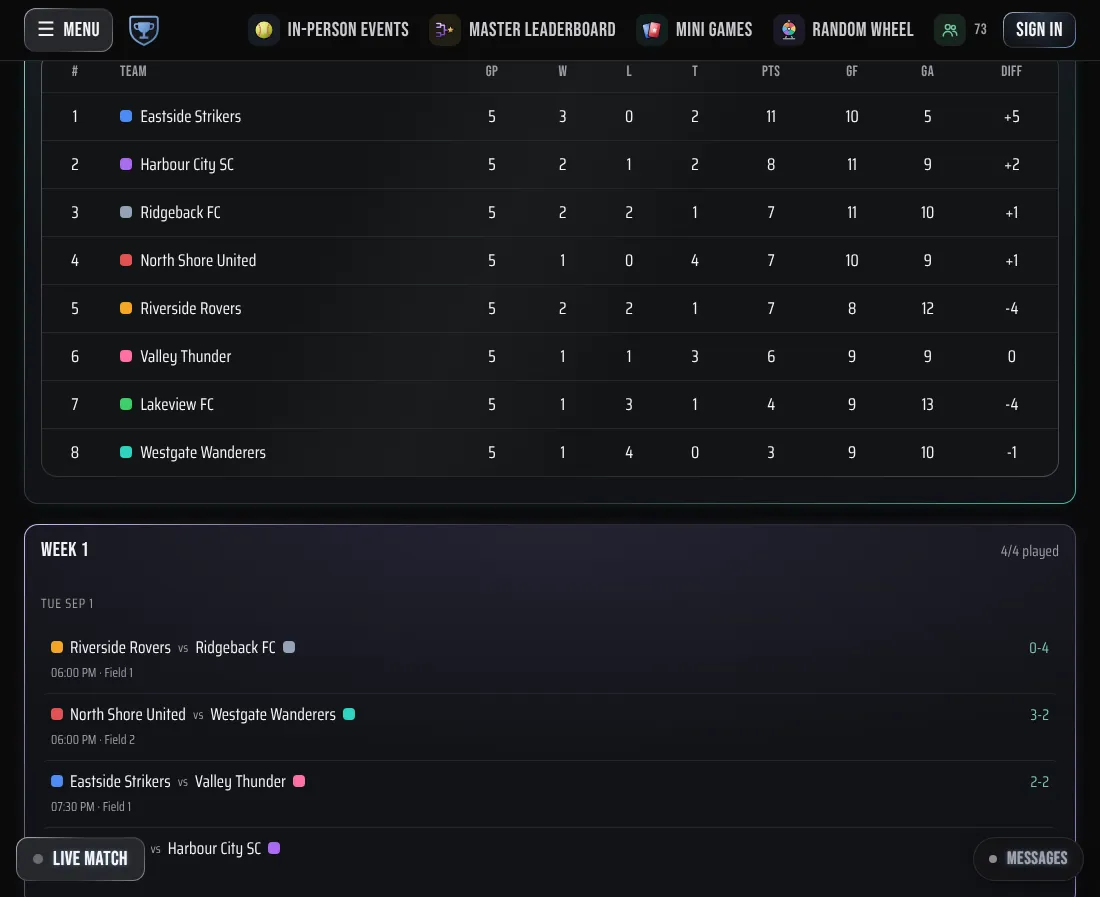
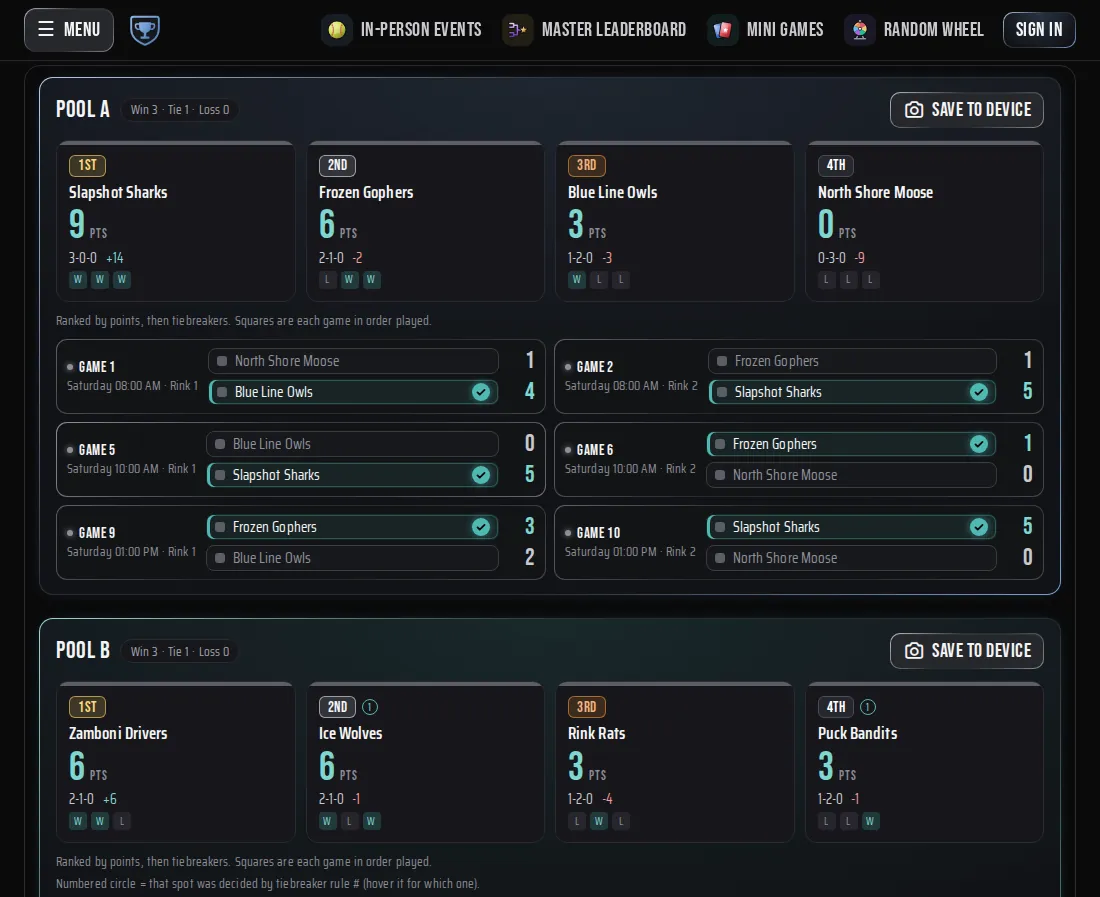
- How the table breaks ties: points, then head-to-head, goal difference, goals scored.
Book referees early
Small-sided youth games often run with one referee. Full-sided games use a referee and two assistant referees where you can get them. Book officials as soon as the fields are confirmed and send them the schedule early, so nobody is covering two fields at once.
Publish one schedule everyone can open
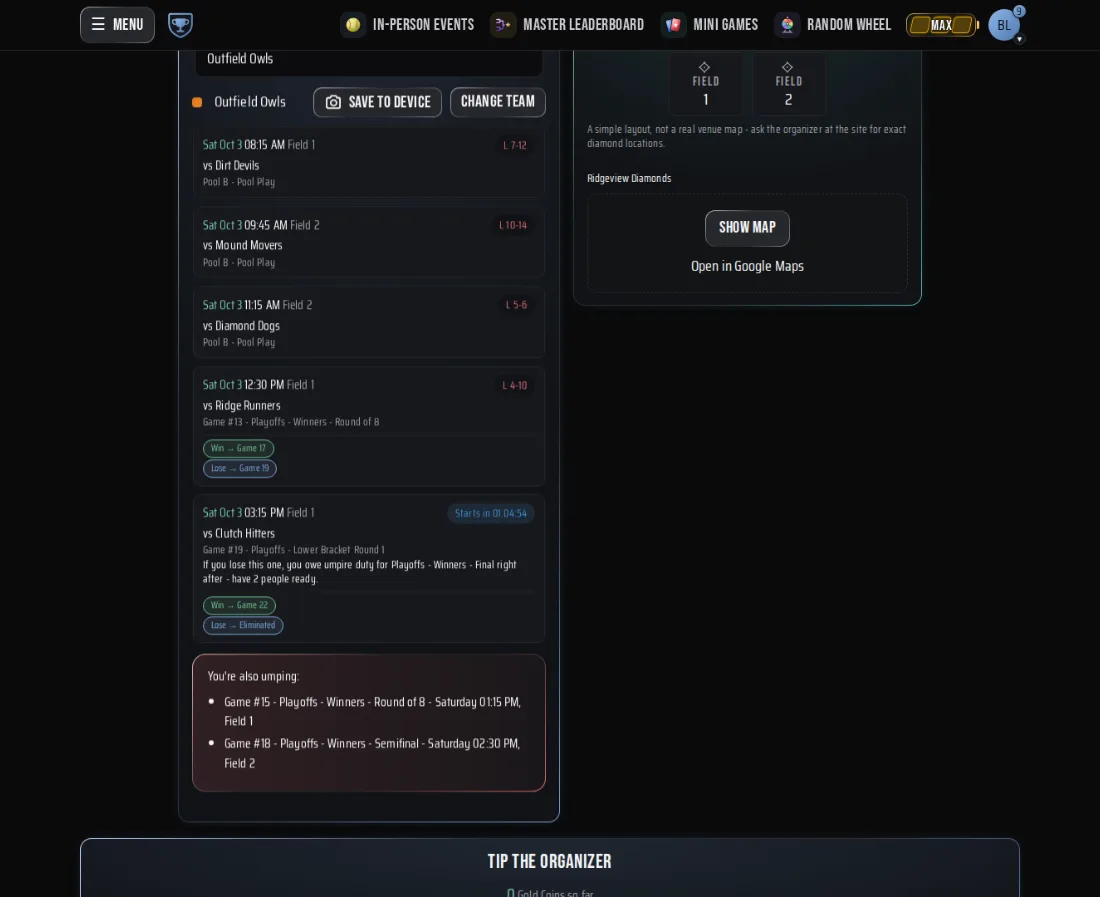
A schedule printed on Friday is out of date by Saturday lunch. One link stays current. Give every game a field and a kickoff, check no team plays twice in a row without a rest, and put the tables and the bracket on the same page.
On the day
- Walk the fields before the first kickoff: numbers, goals, nets and corner flags.
- Get results in at full time so the tables are always current.
- Post one announcement for anything that changes: a weather delay, a field swap, a rule reminder.
- Before the knockouts, check the group tables and tiebreakers once, then let the bracket fill in.
- Hand out the medals while families are still at the field.