Two ways to do it
- Your own umpires. Hired or volunteer umpires cover every game. The most consistent calls, at a cost.
- Team umpires. Teams take turns umpiring games they are not playing in. Common in rec slo-pitch, and free.
Common team umpire arrangements
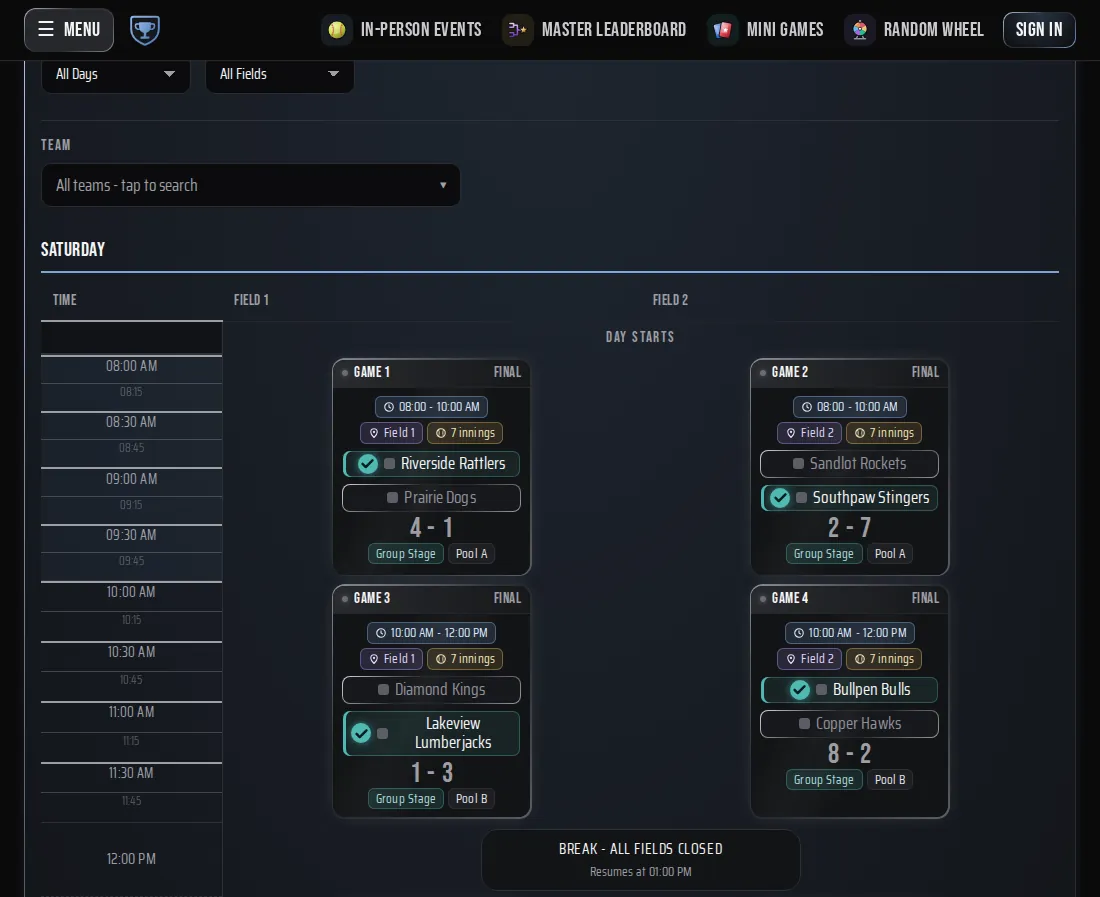
One common rule is that the losing team of a game umpires the next game on the same field. Another is to assign duty in the schedule, giving each team a duty slot when it has a gap between games. Assigning it in advance is easier to plan around and avoids arguments about who lost.

Keep duty fair
Count the duty slots each team gets and keep them even. A team should never have to umpire immediately before or after its own game if it can be avoided, and duty in the last slot of the day is the least popular, so share it out.
Make sure everyone knows
The most common umpire problem is a team that did not know it had duty. Put duty on the schedule itself, next to each game, where teams already look.
Tell team umpires the rules
Volunteer umpires are players, not officials. Give them the short version of your rules: the strike zone or mat, the count, the arc, home run limits and the time limit. A one page sheet at each field saves a lot of arguments.