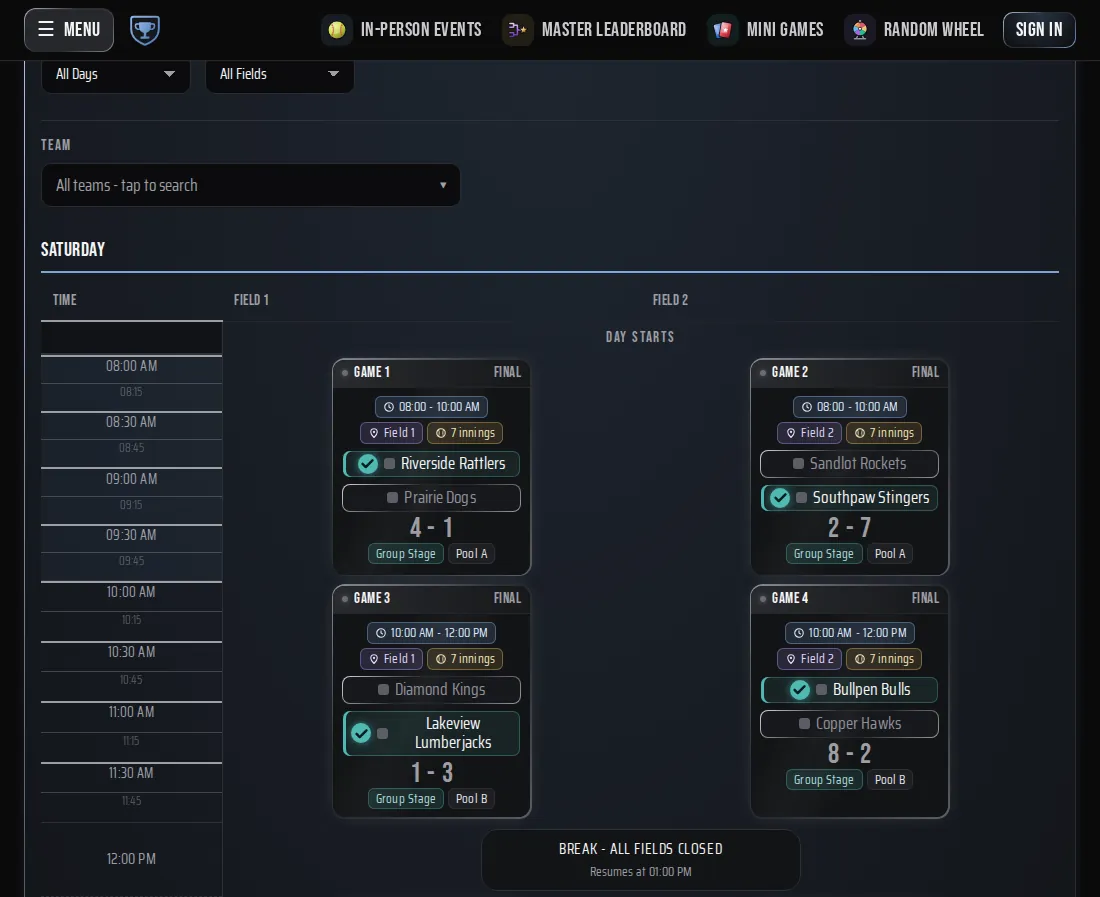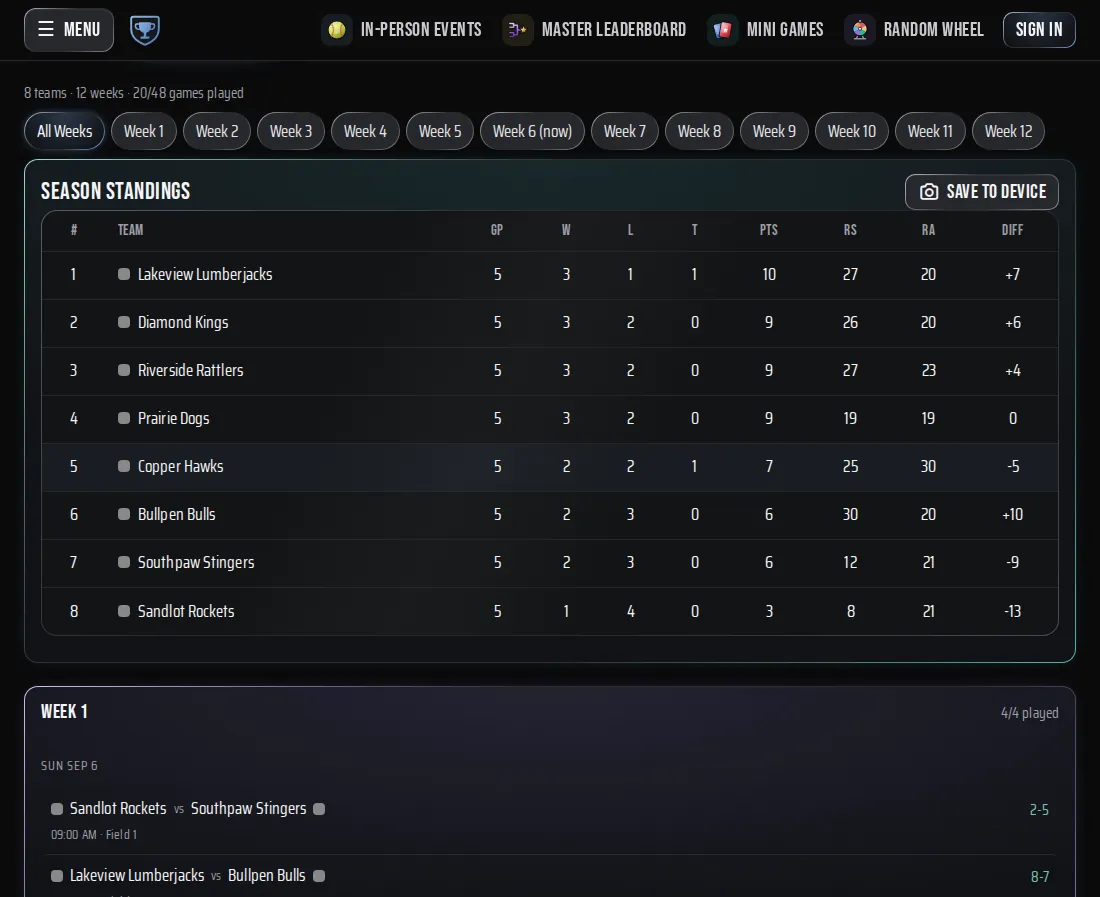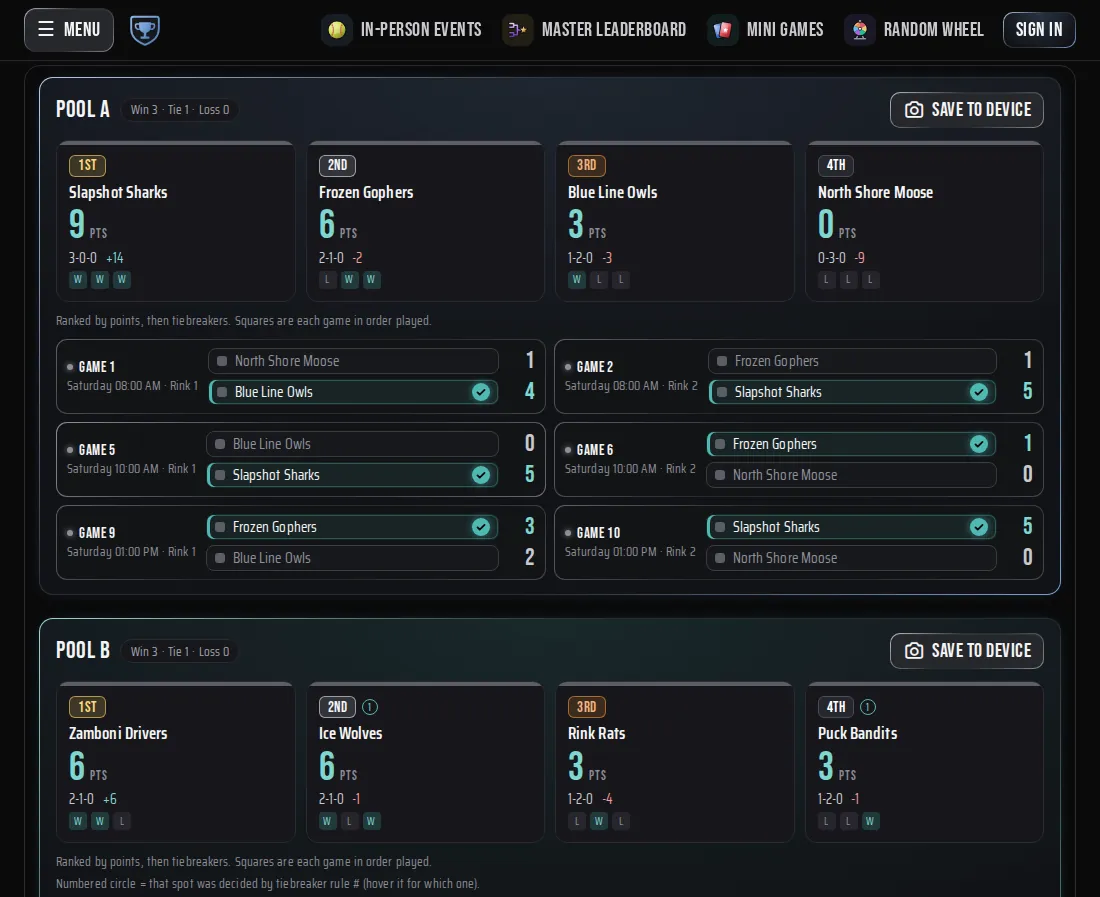
Points first
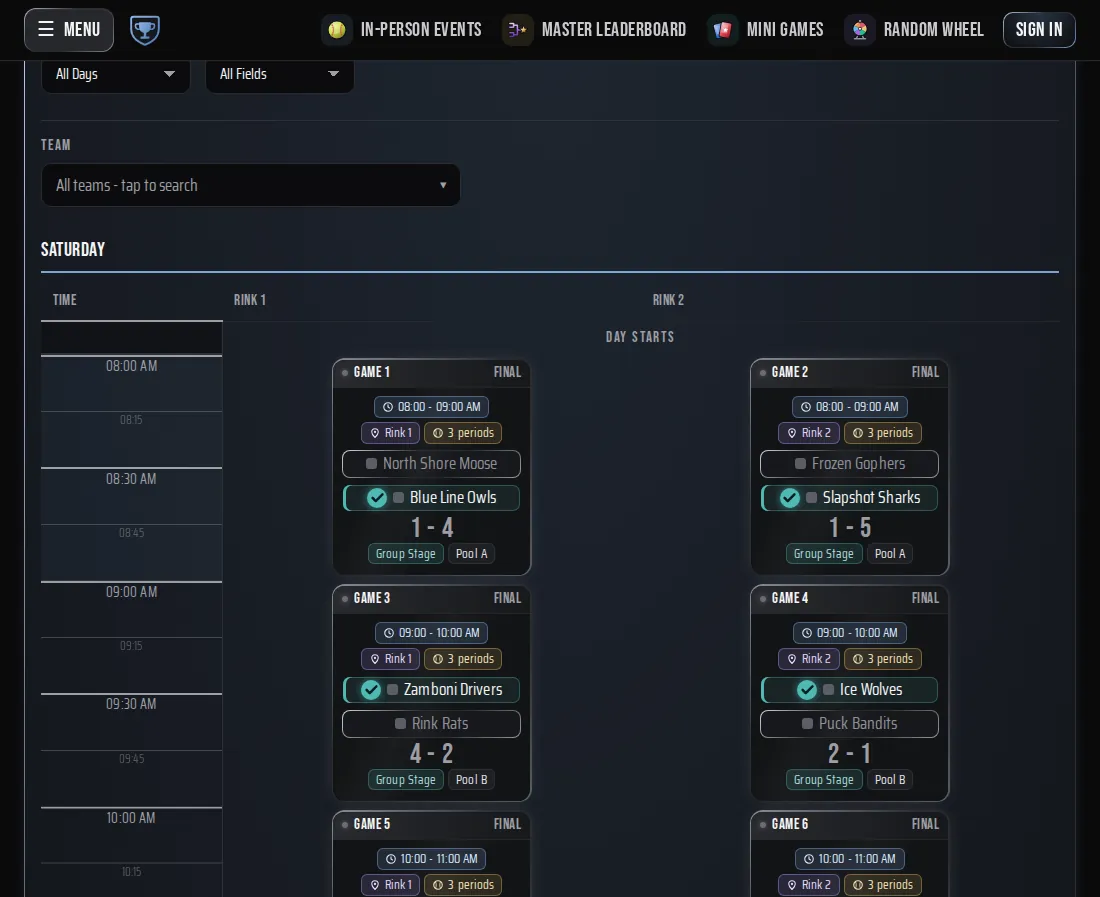
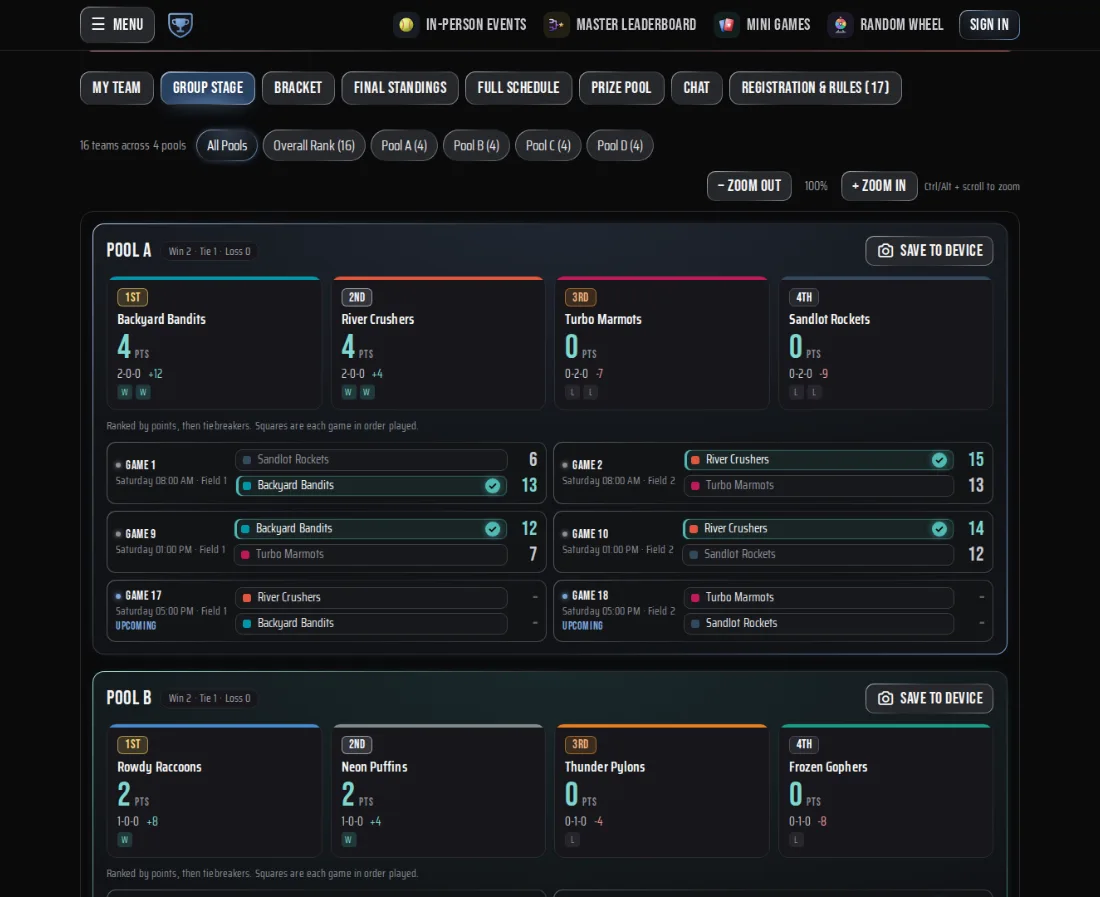
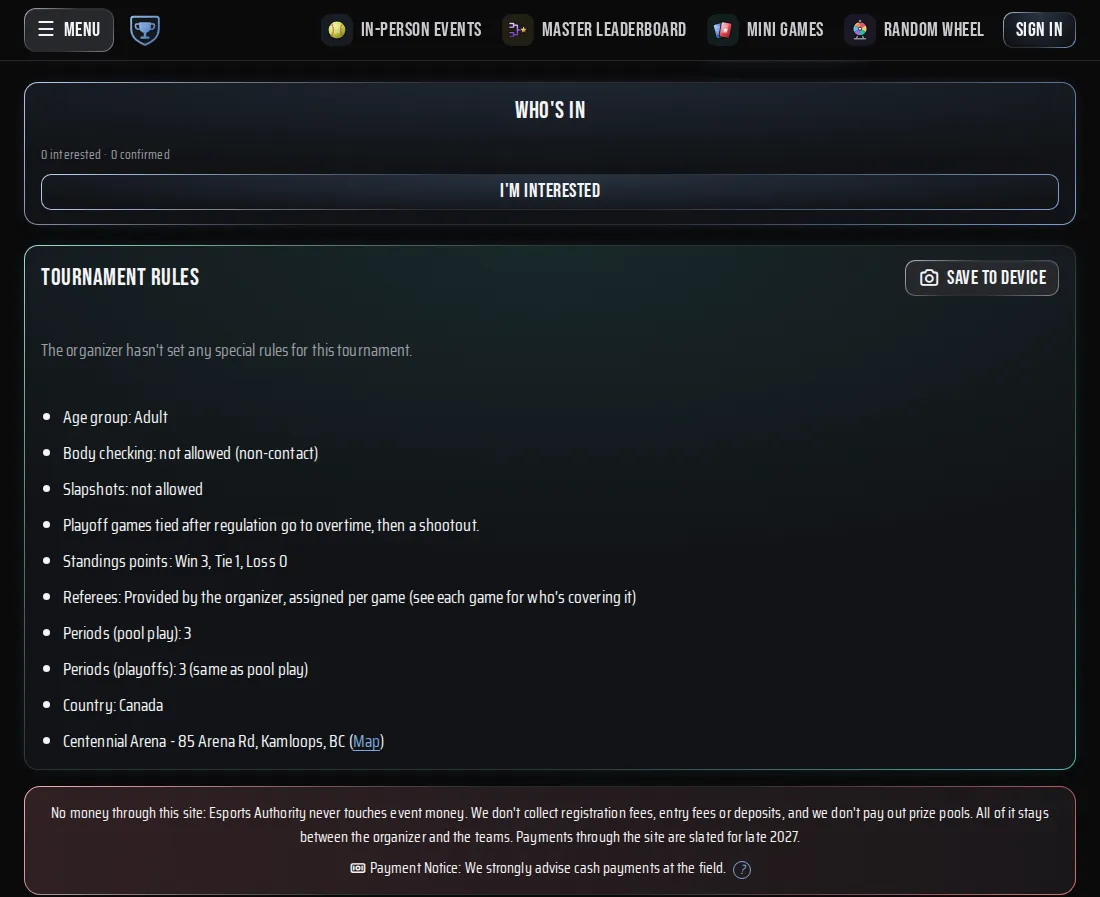
Standings are sorted by points. Many minor hockey tournaments give 2 points for a win and 1 for a tie. Others give 3 for a win, which rewards winning over playing for a tie. Some leagues give a point for an overtime loss, but tournament pool games usually just end tied. Whatever you choose, publish it with the rules.
The usual tiebreakers, in order
- Head-to-head. The result of the game between the tied teams.
- Goal differential. Goals for minus goals against across the pool games.
- Most goals for.
- Fewest goals against.
- Fewest penalty minutes, used by many minor hockey tournaments.
- A coin toss, as the very last resort.
There is no single official order. What matters is that it is written down and every team has read it.
Cap the goal differential
Without a cap, goal differential rewards running up the score. A cap of 5 goals per game is common: a 9 to 1 win counts the same as a 6 to 1 win, so a team that is well ahead has no reason to keep piling on.
Three-way ties
Head-to-head only settles a three-way tie if one team beat both of the others. If the three teams each won one and lost one against each other, move to the next rule for all three.
Say in your rules what happens once one team is separated: either carry on down the list for the remaining two, or go back to head-to-head between them. Both are used.
Ties in the playoffs
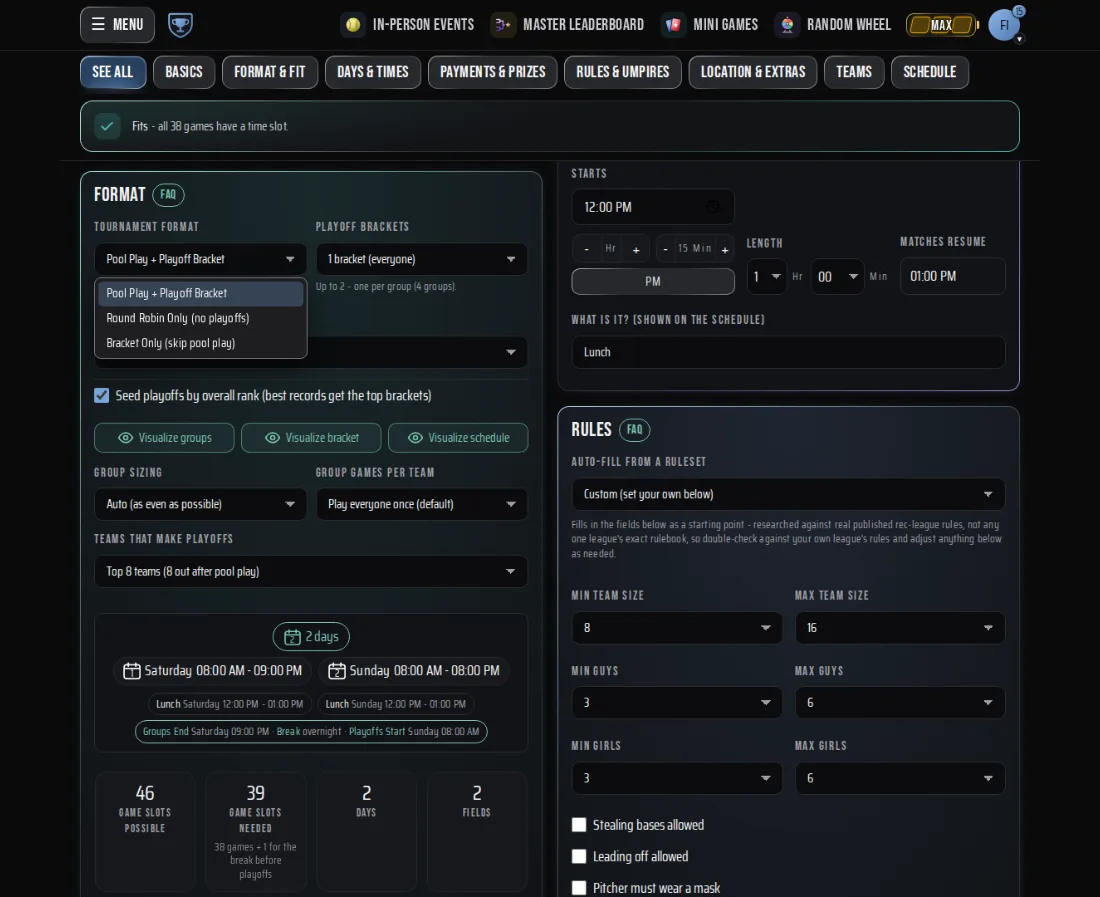
A playoff game needs a winner. The common approach is a short sudden death overtime, often 5 minutes and often 3 on 3 or 4 on 4, then a shootout. A typical shootout is 3 shooters a side, then one at a time until one team scores and the other does not.
Check your ice before you choose. Overtime eats into the next game's slot, so a tight schedule may need to go straight to a shootout, or play overtime only in the final.
Show your working
Arguments start when a team cannot see why it finished where it did. Post the points, the tiebreaker order and the standings with records and goal totals where every team can check them.