Lightning comes first
If you hear thunder, clear the fields. A widely used rule is to wait 30 minutes after the last thunder or lightning before play resumes, and to restart the 30 minutes if it strikes again. Tell every team the rule in advance so nobody argues about it on the day.
Decide in advance how you will catch up
- Shorten games: drop the time limit or the innings.
- Cut pool play: count the games already played and seed from them.
- Shrink the playoffs: fewer teams in the bracket, or single instead of double elimination.
- Use a second day or an evening slot if you have the fields.
Put this order in your rules. Teams accept almost any plan they were told about beforehand.
If you cannot finish
Decide how a champion is named if the final cannot be played: the higher seed, co-champions, or a later date. Decide too what happens to entry fees if the event is cancelled, and say so when teams register.
Tell everyone once, in one place
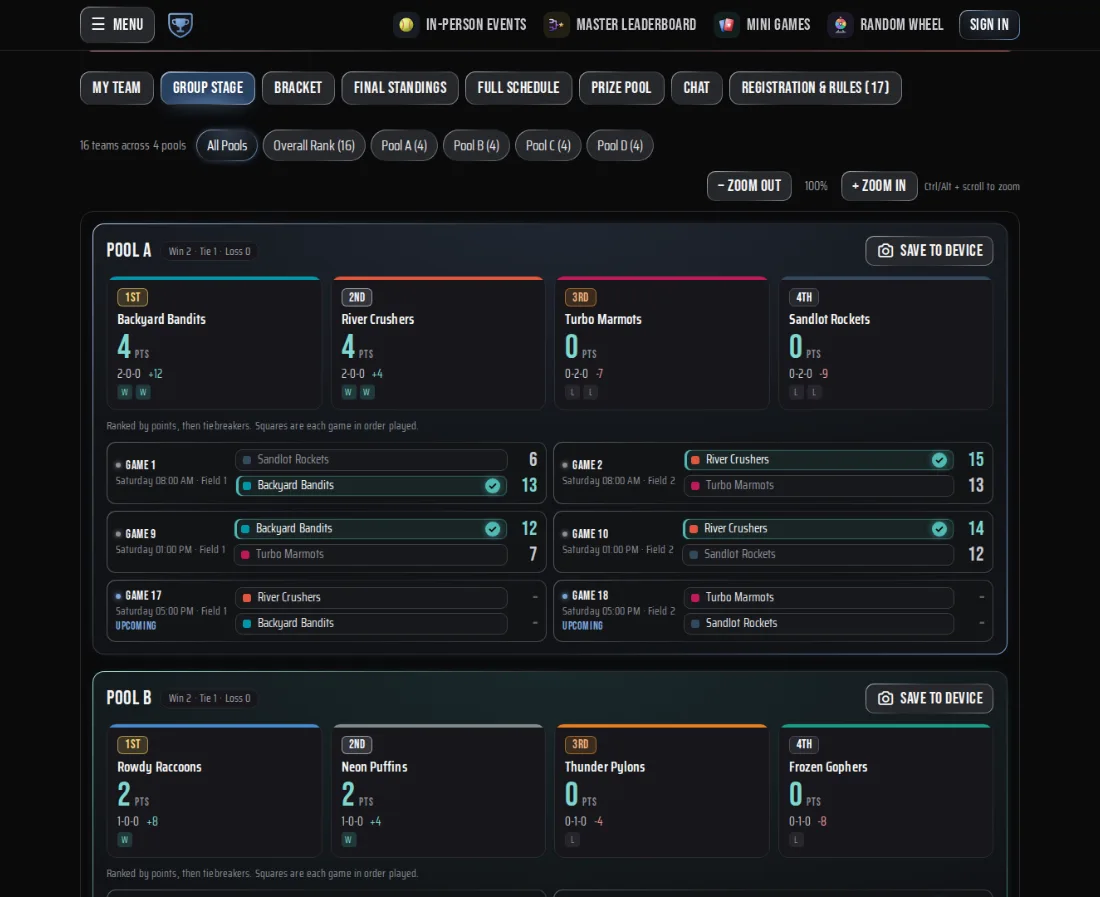
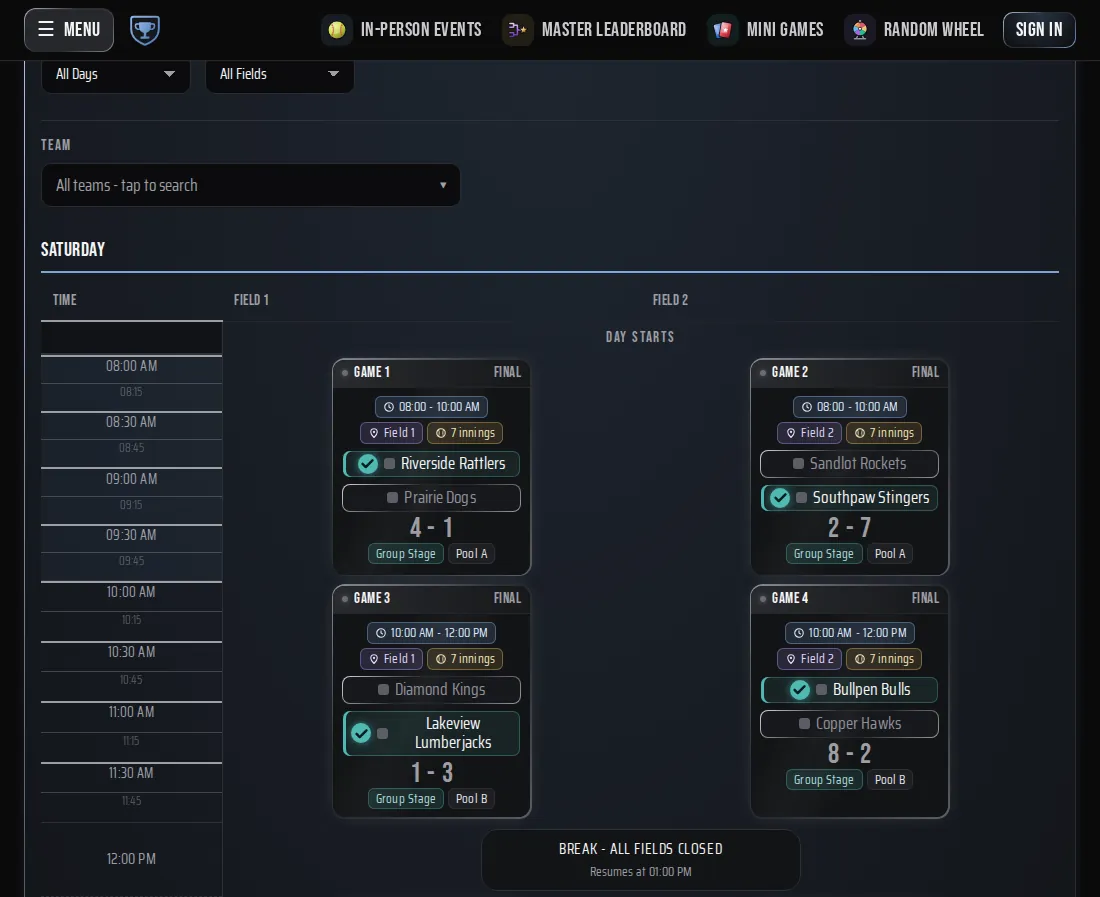
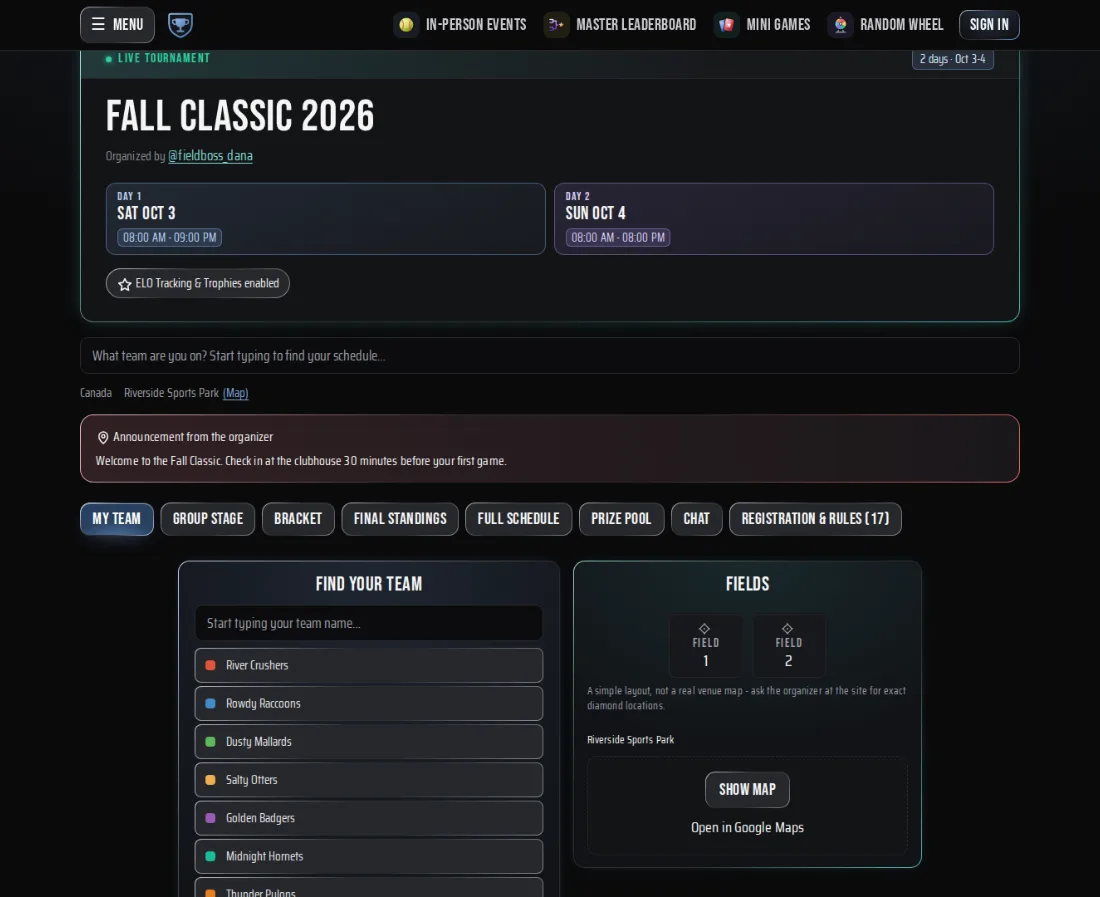
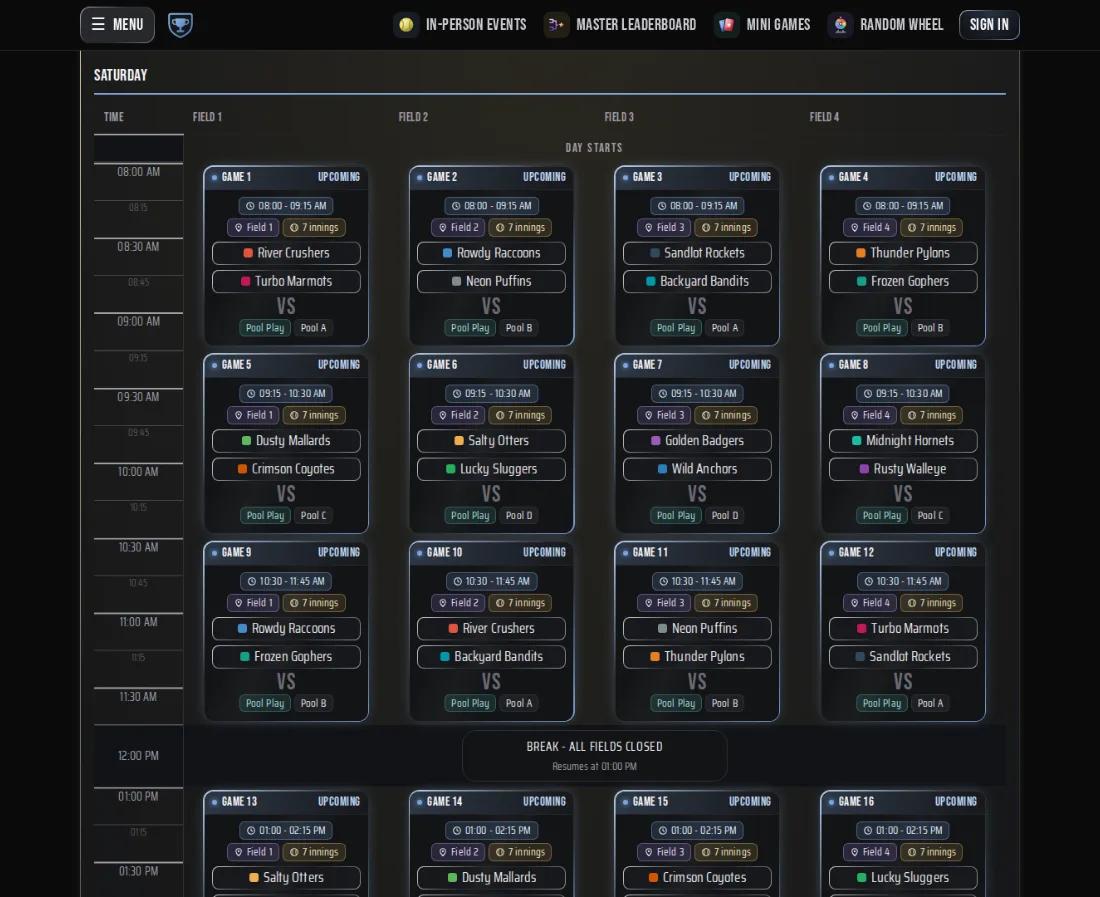
The worst part of a delay is the confusion. Make one announcement that reaches every team, then move the games in the schedule so the link everyone uses is right.