Overall seeding or cross-pool seeding
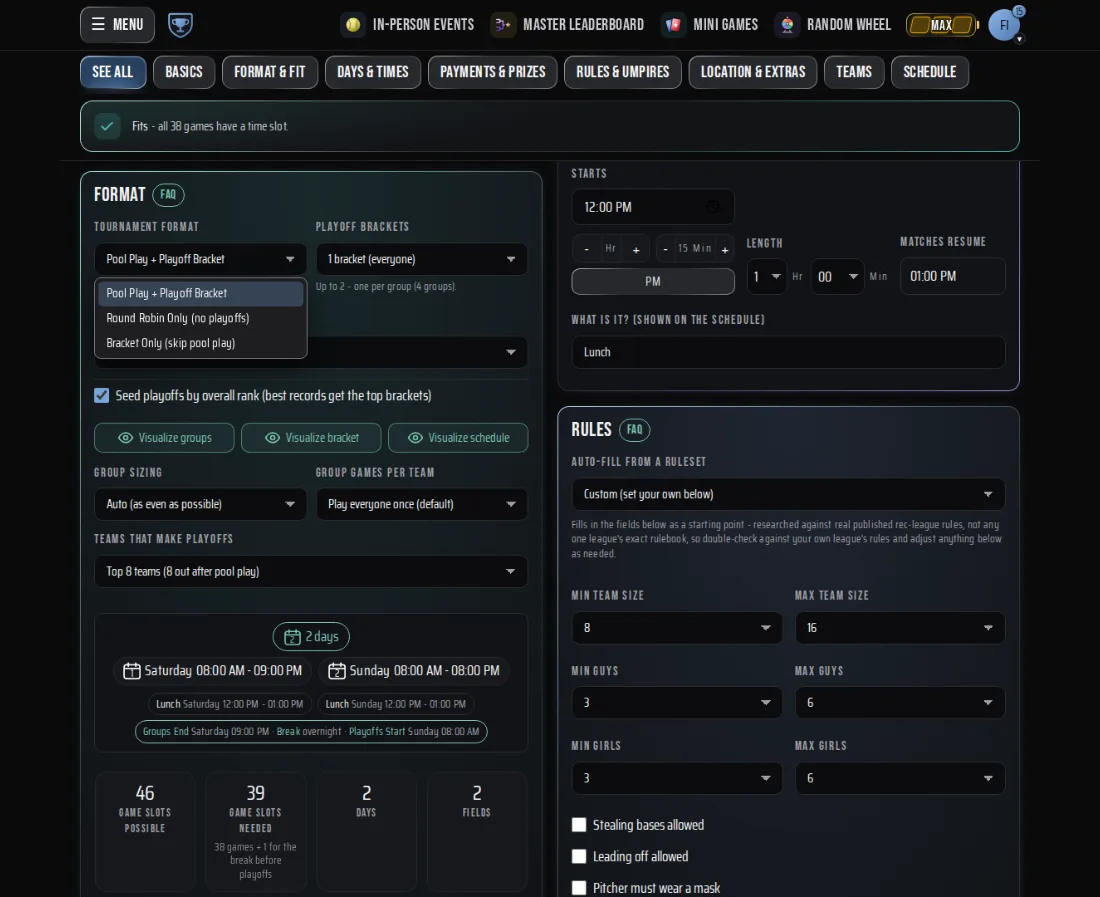
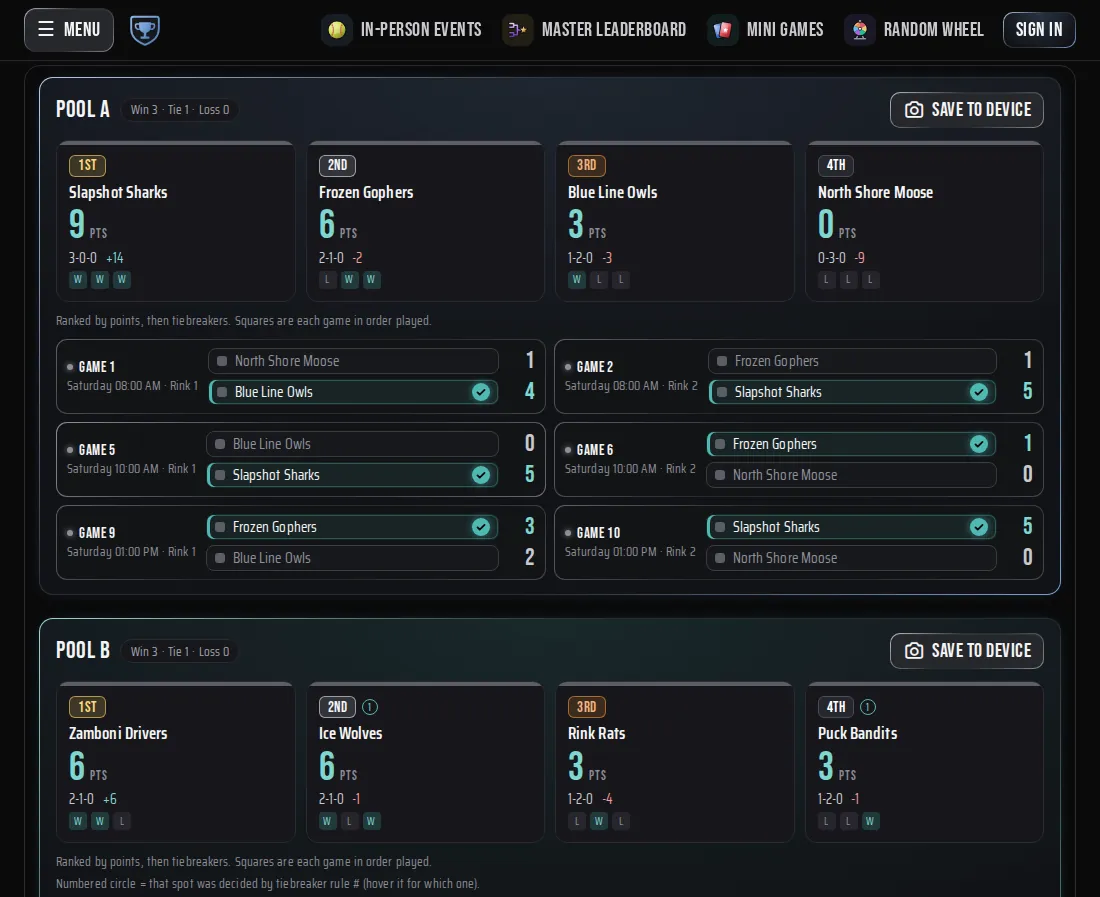
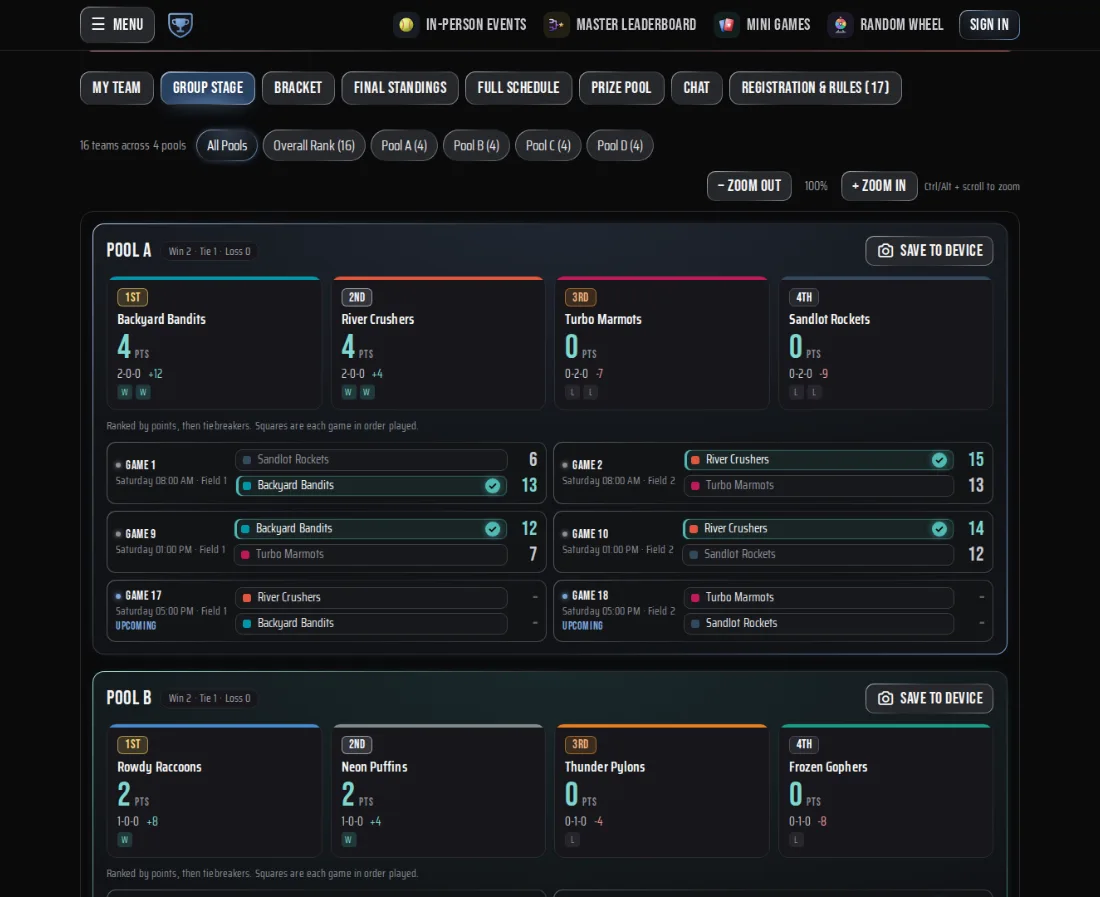
There are two common ways to seed. Overall seeding ranks every team on one list by points, then tiebreakers, no matter which pool they played in. Cross-pool seeding pairs pools against each other, so the winner of pool A plays the runner-up of pool B, and the winner of pool B plays the runner-up of pool A.
Cross-pool seeding is simple to explain and stops two teams from the same pool meeting again in the first round. Overall seeding rewards the team with the best record across the event. Either is fine. Pick one and write it in the rules before the first pitch.
The standard pairings
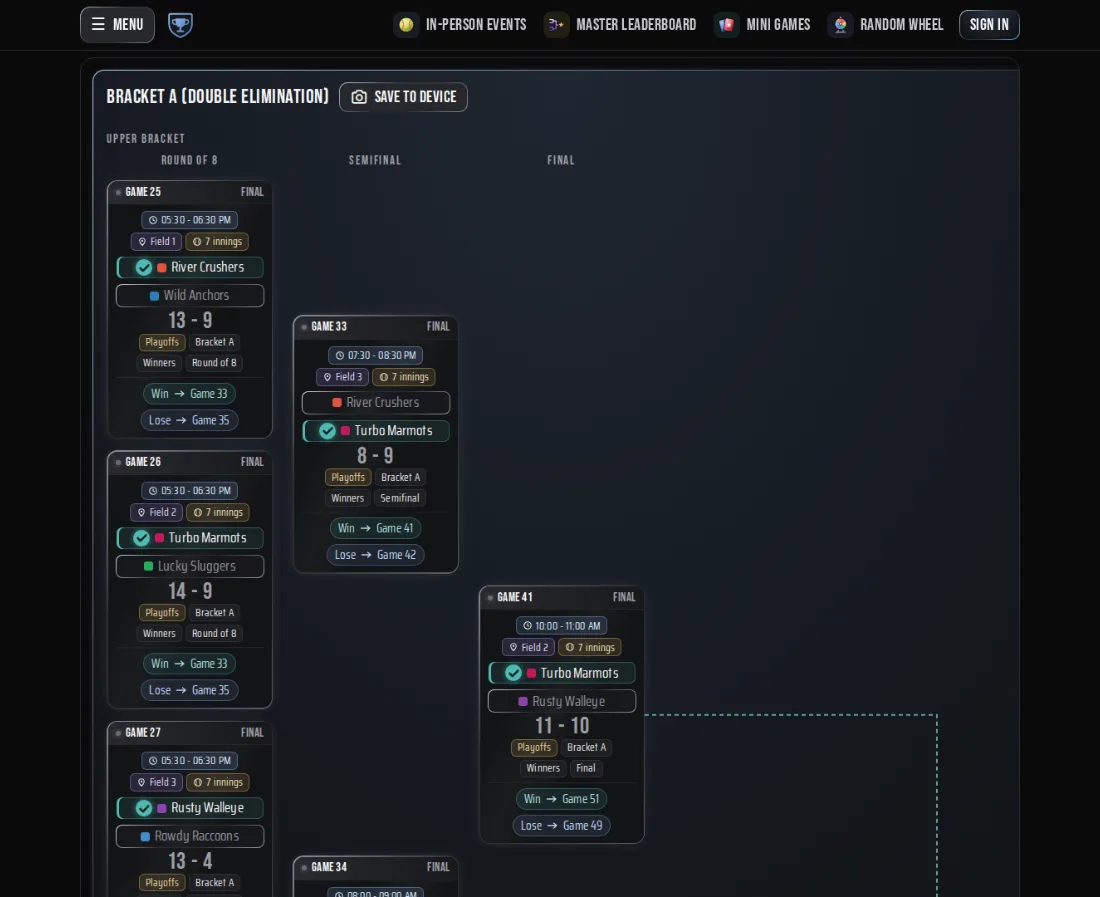
In a bracket of 8, the first round is 1 against 8, 4 against 5, 2 against 7 and 3 against 6, laid out in that order from top to bottom. That layout keeps seeds 1 and 2 on opposite halves, so if both keep winning they meet in the final.
- 4 teams: 1 v 4 and 2 v 3.
- 8 teams: 1 v 8, 4 v 5, 2 v 7, 3 v 6.
- 16 teams: the same pattern, so 1 v 16 sits on top and 2 v 15 on the other half.
When the team count is not 4, 8 or 16
A single elimination bracket fills evenly at 4, 8, 16 or 32 teams. With any other count, the top seeds get a bye: they skip the first round and wait for a winner. With 6 teams, seeds 1 and 2 get byes while 3 plays 6 and 4 plays 5. With 12 teams, the top four seeds get byes.
Byes are the reward for winning your pool. Say so in your rules, and teams will play pool games to win rather than to coast.
Splitting into A and B brackets
With 16 or more teams of mixed ability, many organizers split the playoffs by seed: the top half plays for the A title and the bottom half for the B title. Every team keeps playing teams near its level, and more teams go home with something.
Settle ties before you seed
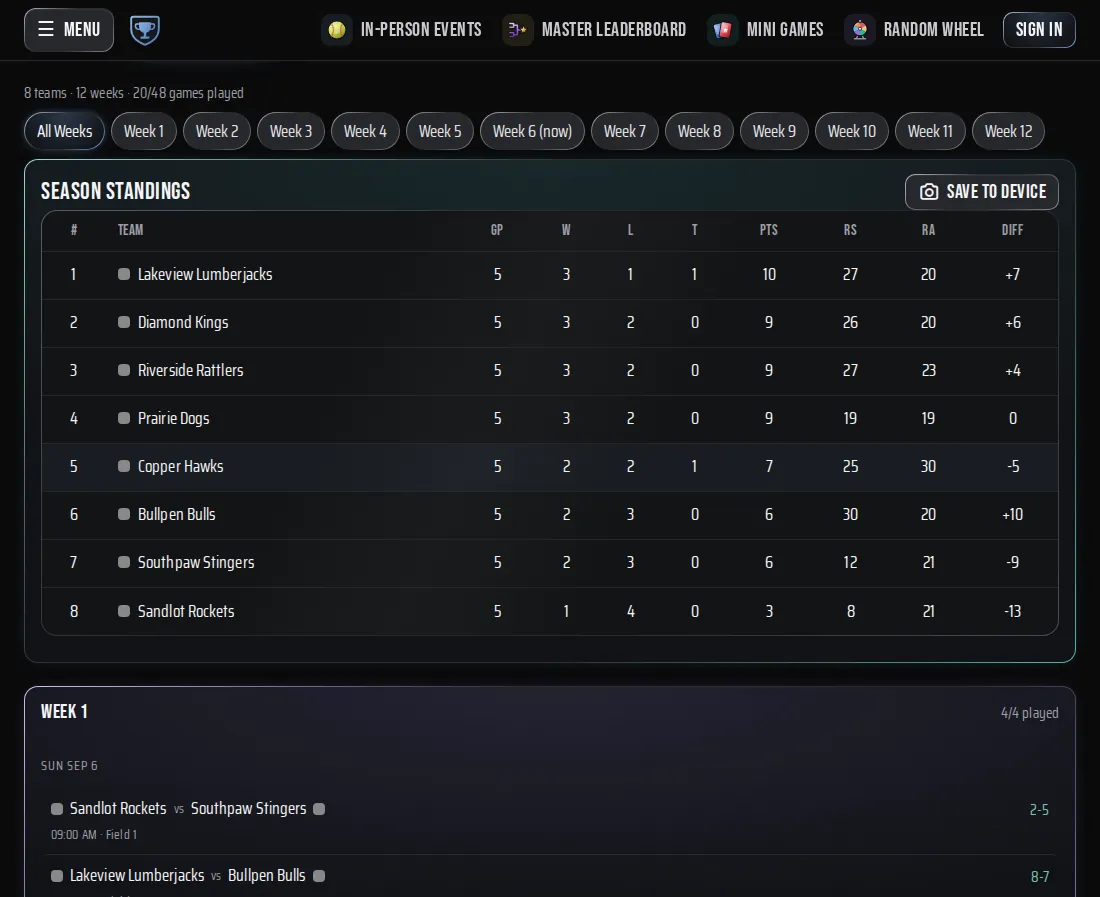
Seeding is only as fair as the standings behind it. Apply your tiebreakers in the order you published, then seed. More on that in Softball Tiebreakers Explained.