Start with the fields and the hours
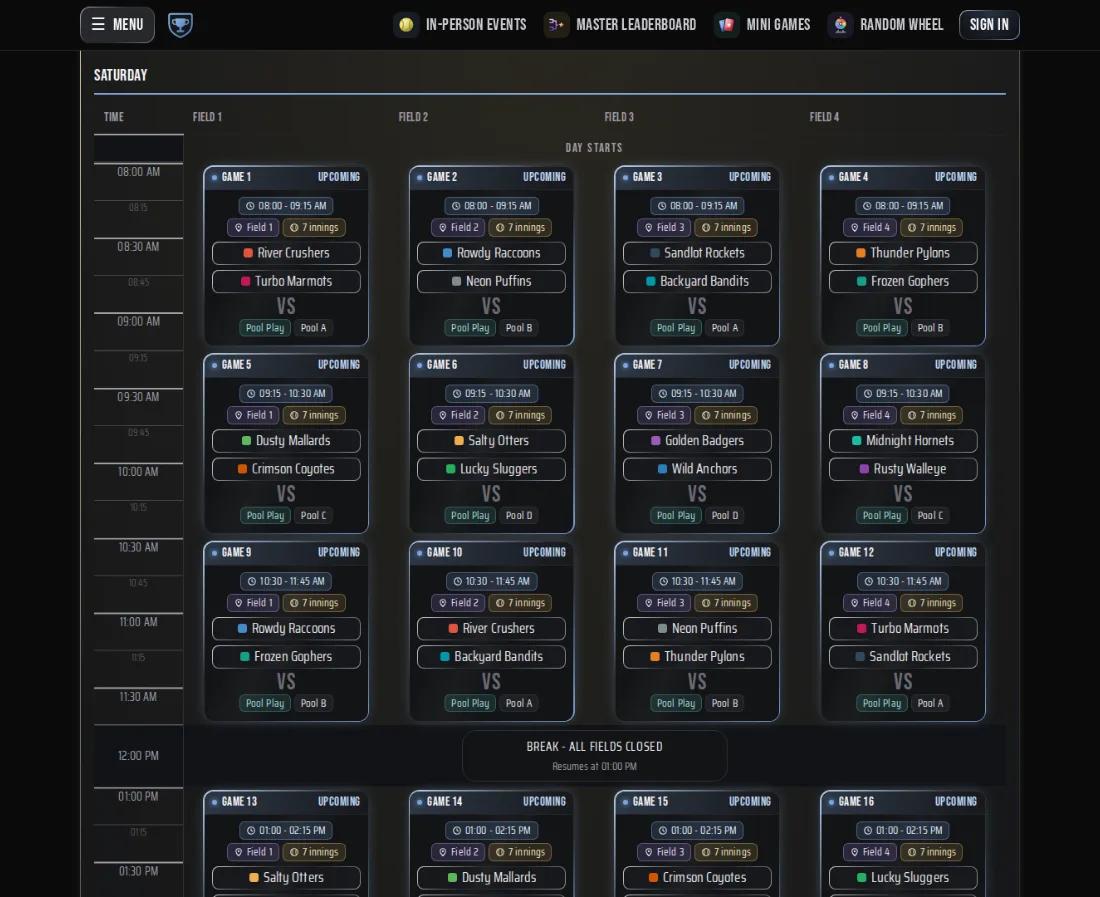
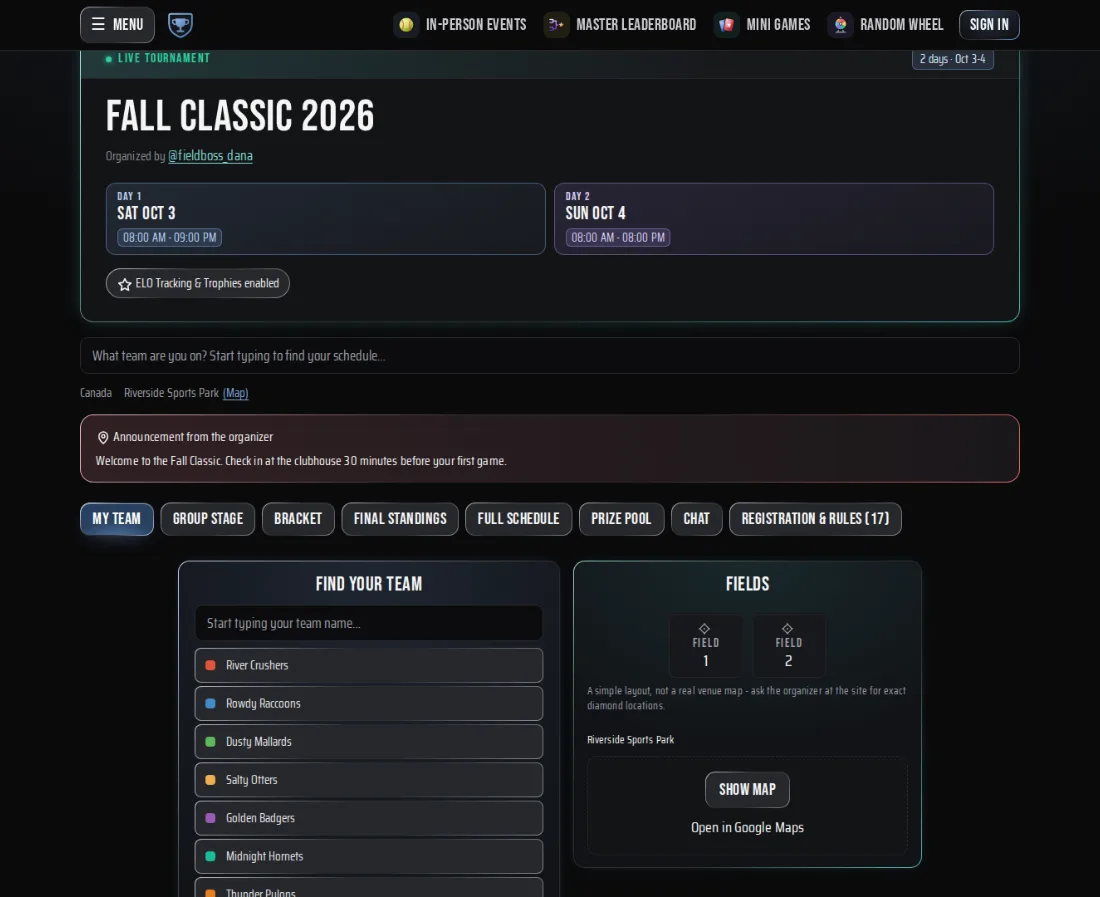
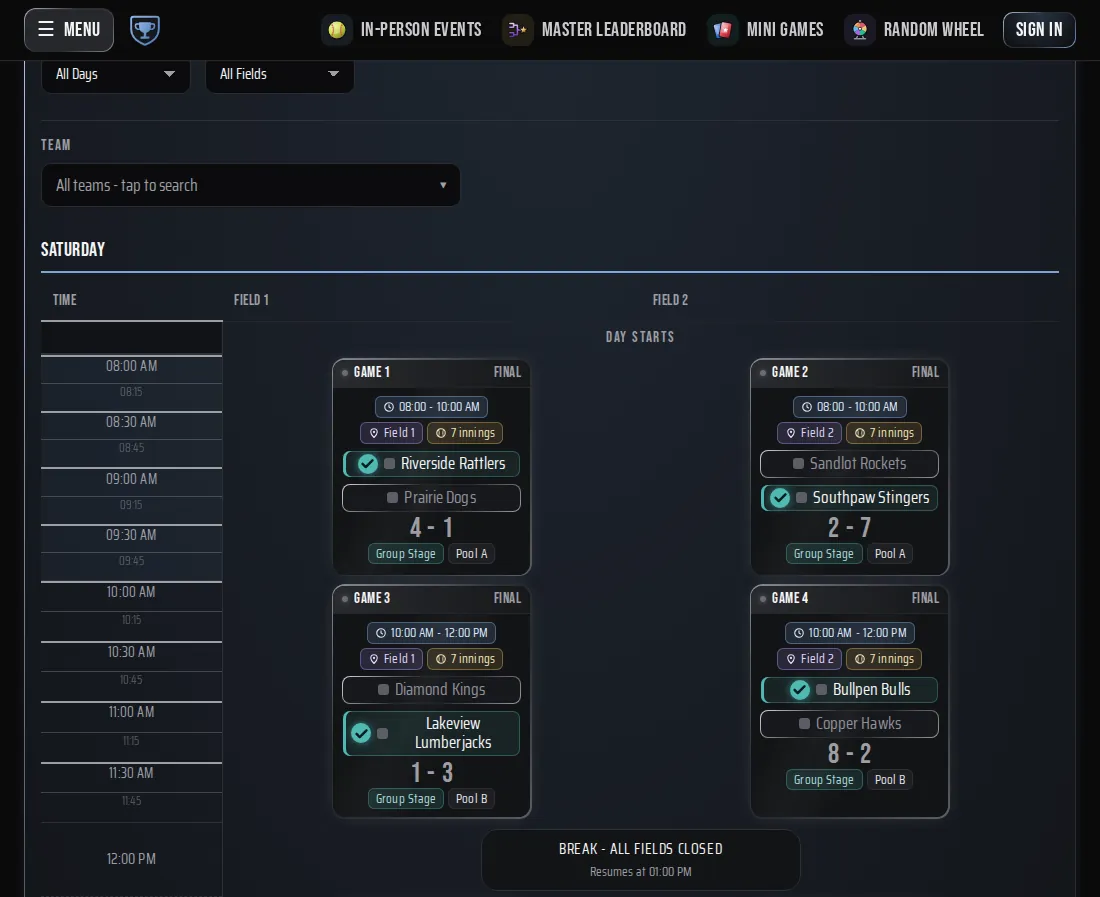
Write down how many fields you have, which days, and the first and last game time on each. Check which fields have lights, and whether the outfield fences suit the age group.
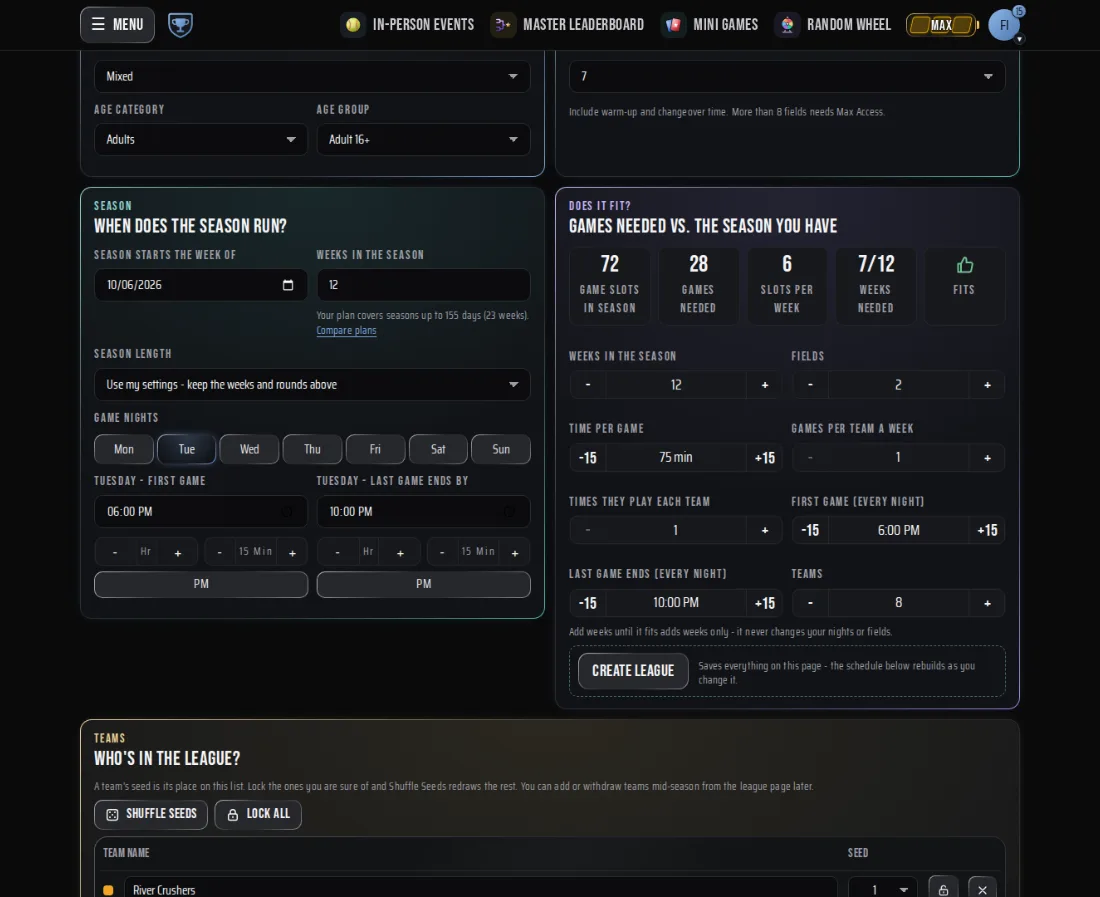
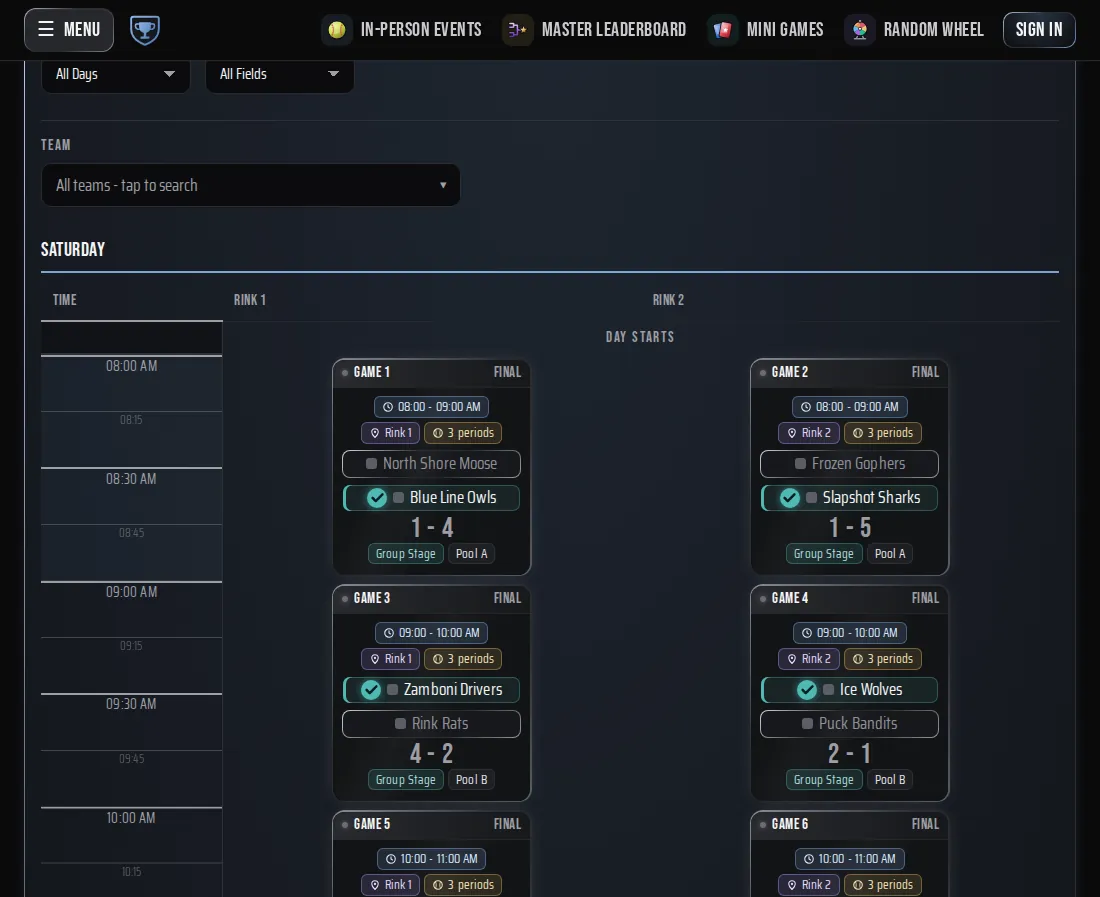
A 7 inning tournament game is usually booked in a 2 hour slot, with a time limit such as no new inning after 1 hour 45 minutes. One field from 8 am to 8 pm holds 6 games. Two fields hold 12 a day.
Work out how many teams fit
Teams travel for a guaranteed number of games, usually 3 or 4. Pools of 4 give every team 3 games before the playoffs.
- 8 teams: two pools of 4 and a 4 team playoff is 15 games. On 2 fields that fits a weekend with slots to spare.
- 16 teams: four pools of 4 and an 8 team playoff is 31 games. That needs about 3 fields over two days.
Leave spare slots. Baseball weekends lose time to rain and to extra innings more often than anyone plans for.
Pick a format
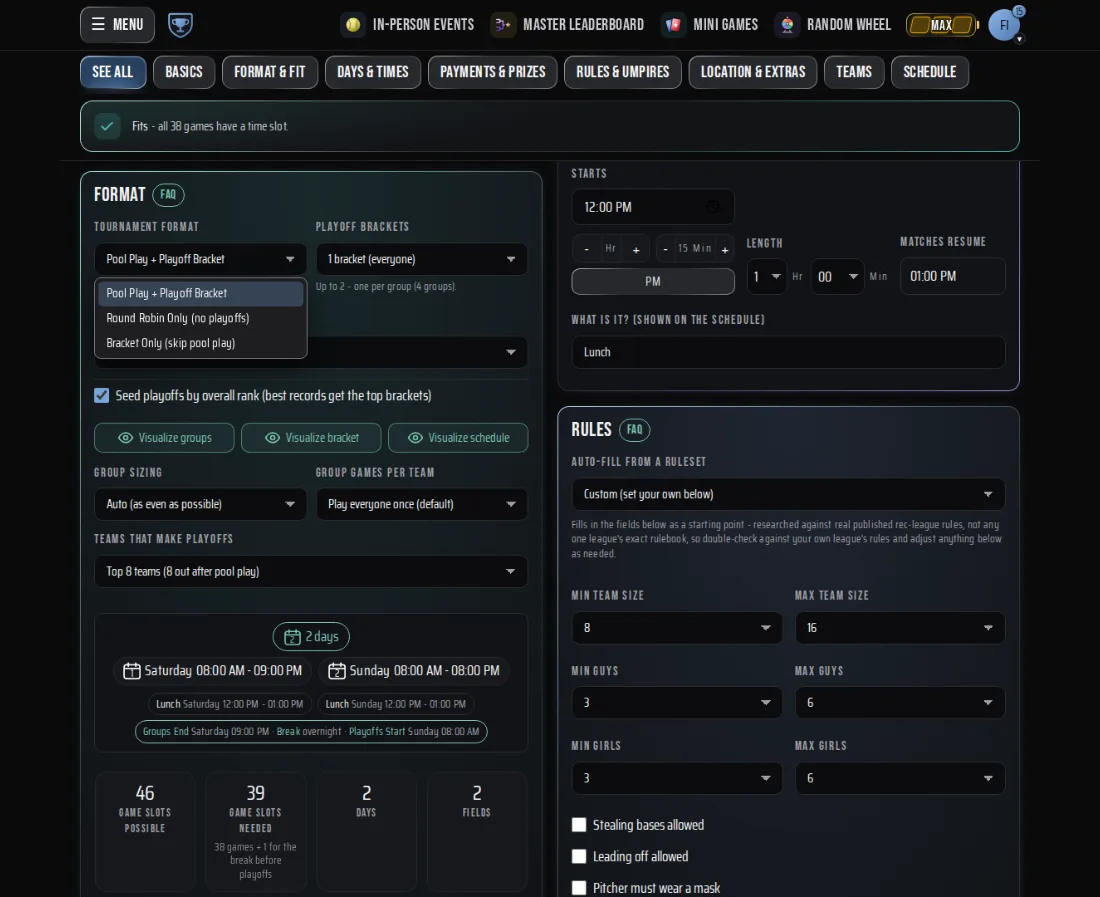
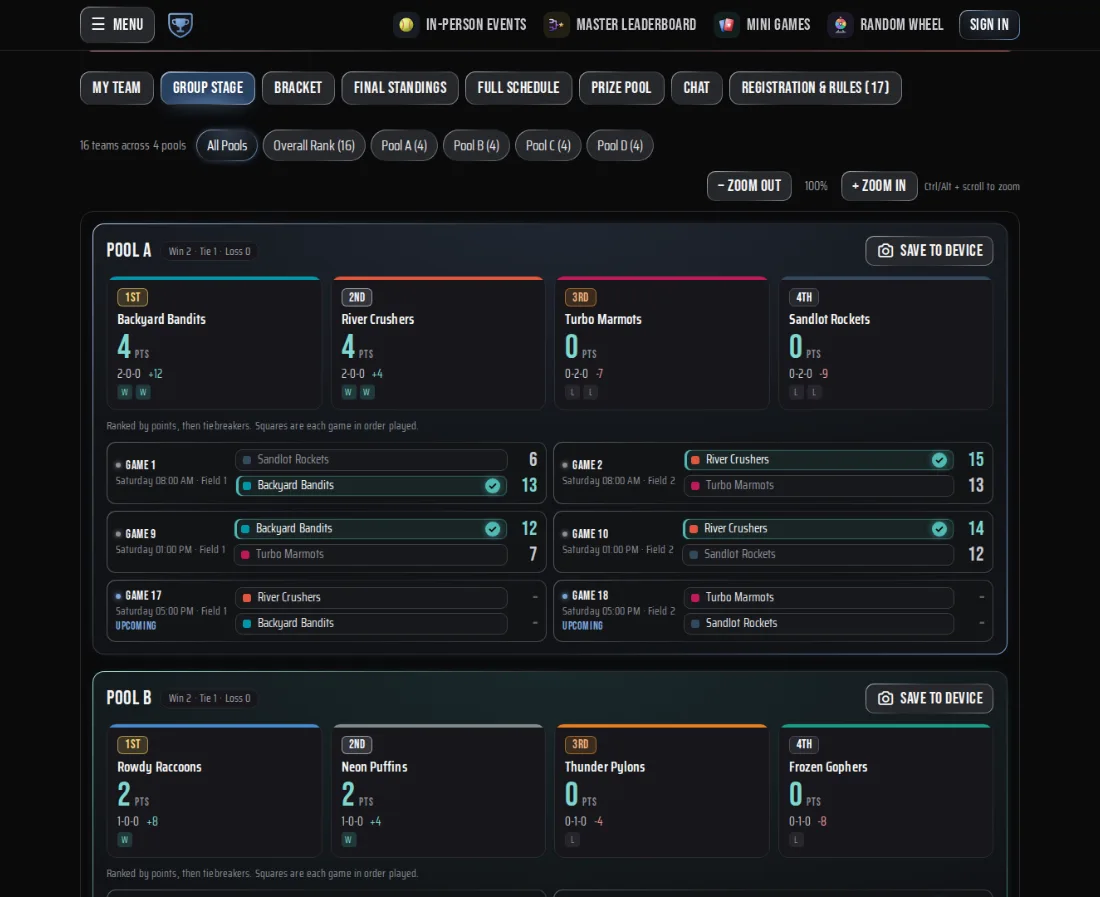
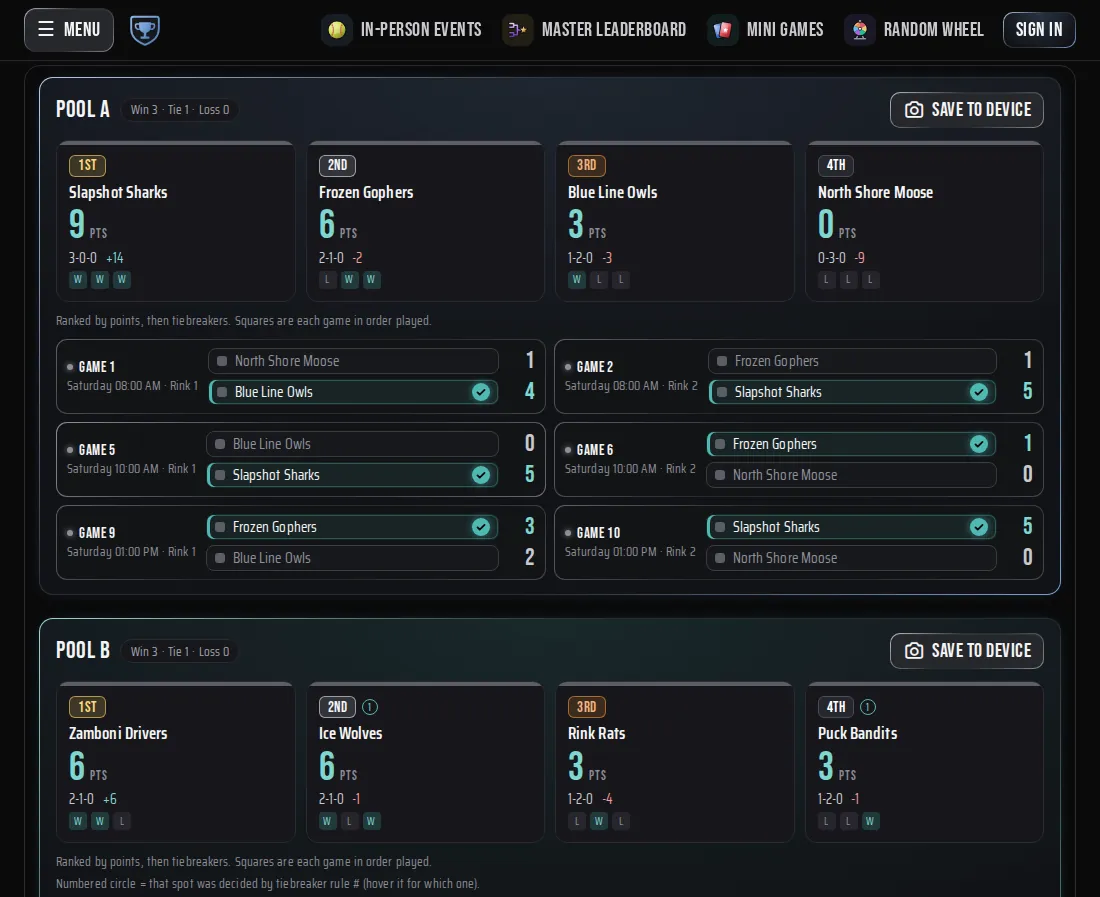
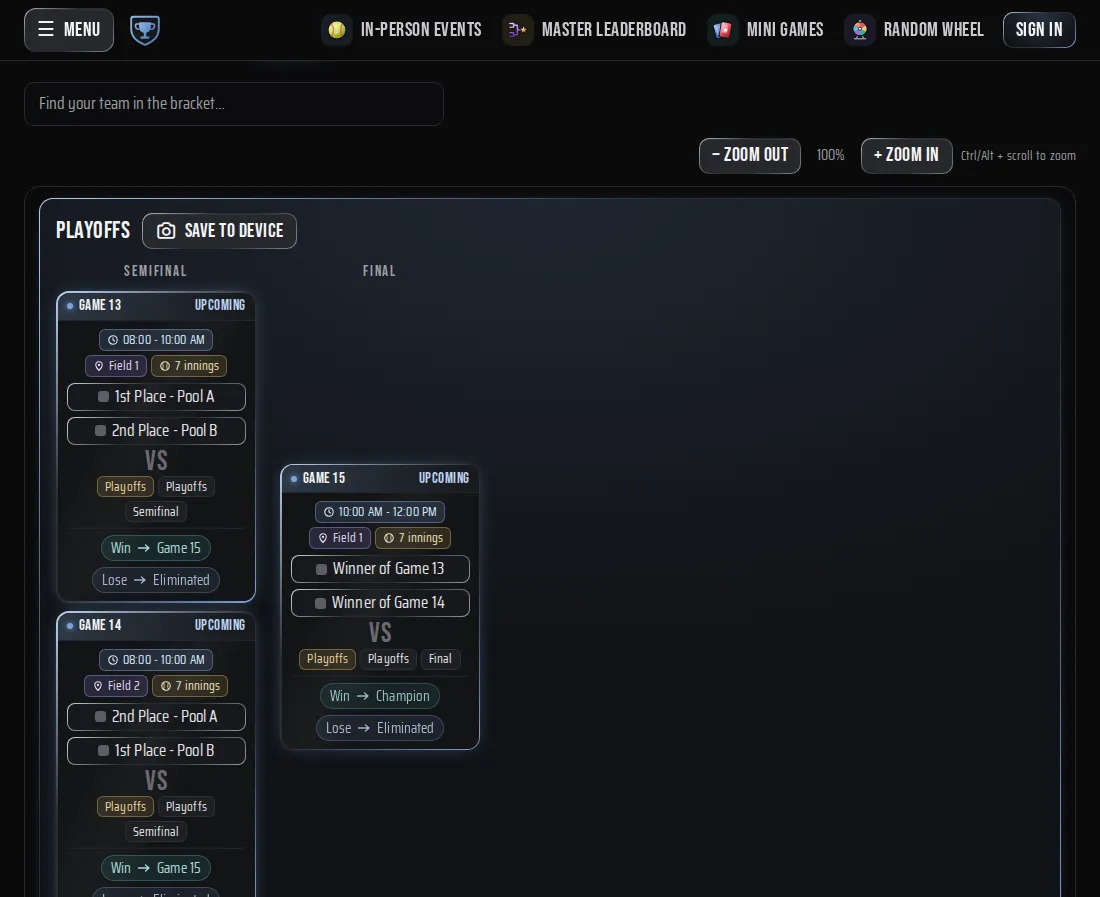
- Pools, then a playoff bracket. The usual format, with the pool standings seeding the playoffs.
- Round robin only. Good for 4 or 5 teams on one field.
- Double elimination. No team goes home after one loss, but it needs a lot more games and field time.
Decide how home team is chosen. A coin toss in pool play and the higher seed in the playoffs is common.
Set the pitching rules
Pitching limits protect young arms and stop one team from riding its best pitcher all weekend. If your teams play under a governing body, use its pitch counts and rest days. If not, write your own: the most pitches or innings a pitcher can throw in a day, the rest needed after a set number, and whether a pitcher who leaves the mound can return.
Decide who keeps the count. A common approach is that both teams track pitches and agree the number with the plate umpire after each game.
Write the rest of the rules down
- Innings and time limit, and what happens to a game tied when time runs out.
- Run rule, for example 15 runs after 3 innings or 10 after 4.
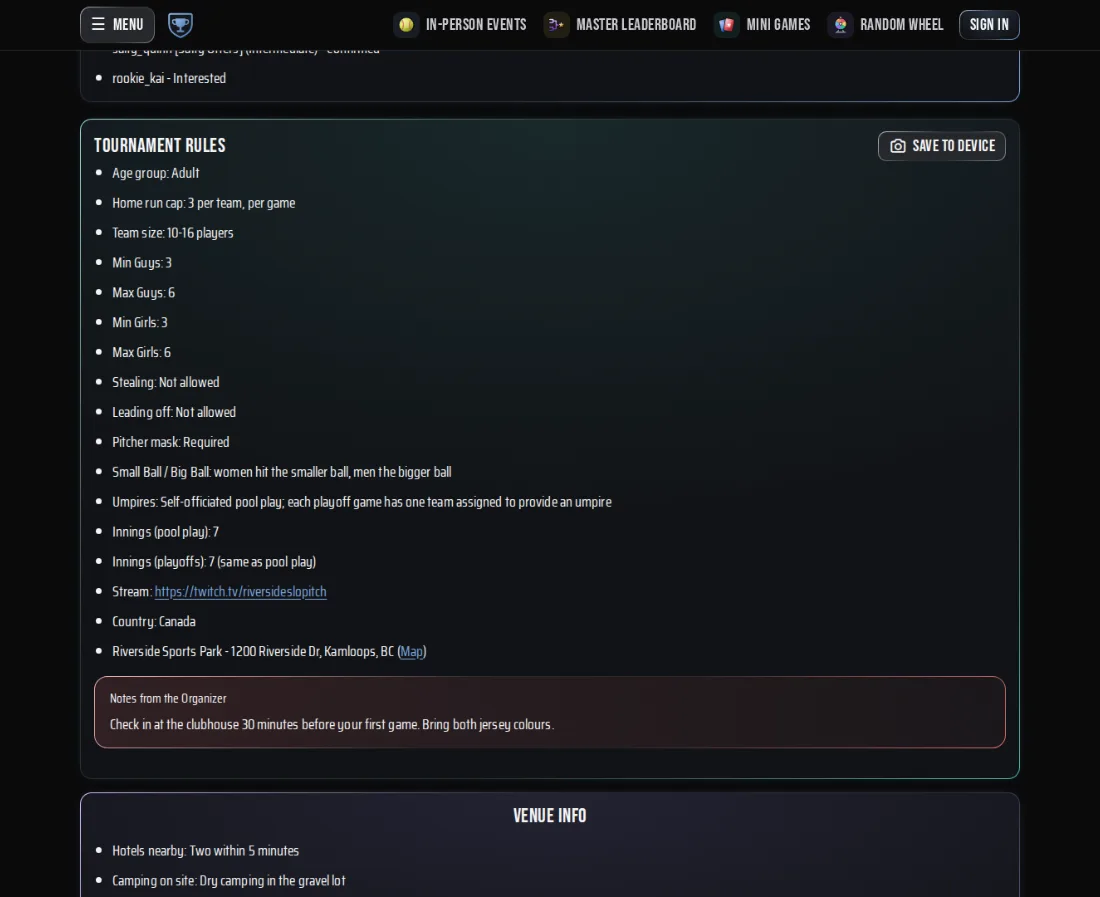
- Bats allowed: wood only, or the approved metal bats for the age group.
- Courtesy runners for the pitcher and catcher.
- Batting order: nine players or the entire roster, and re-entry for youth.
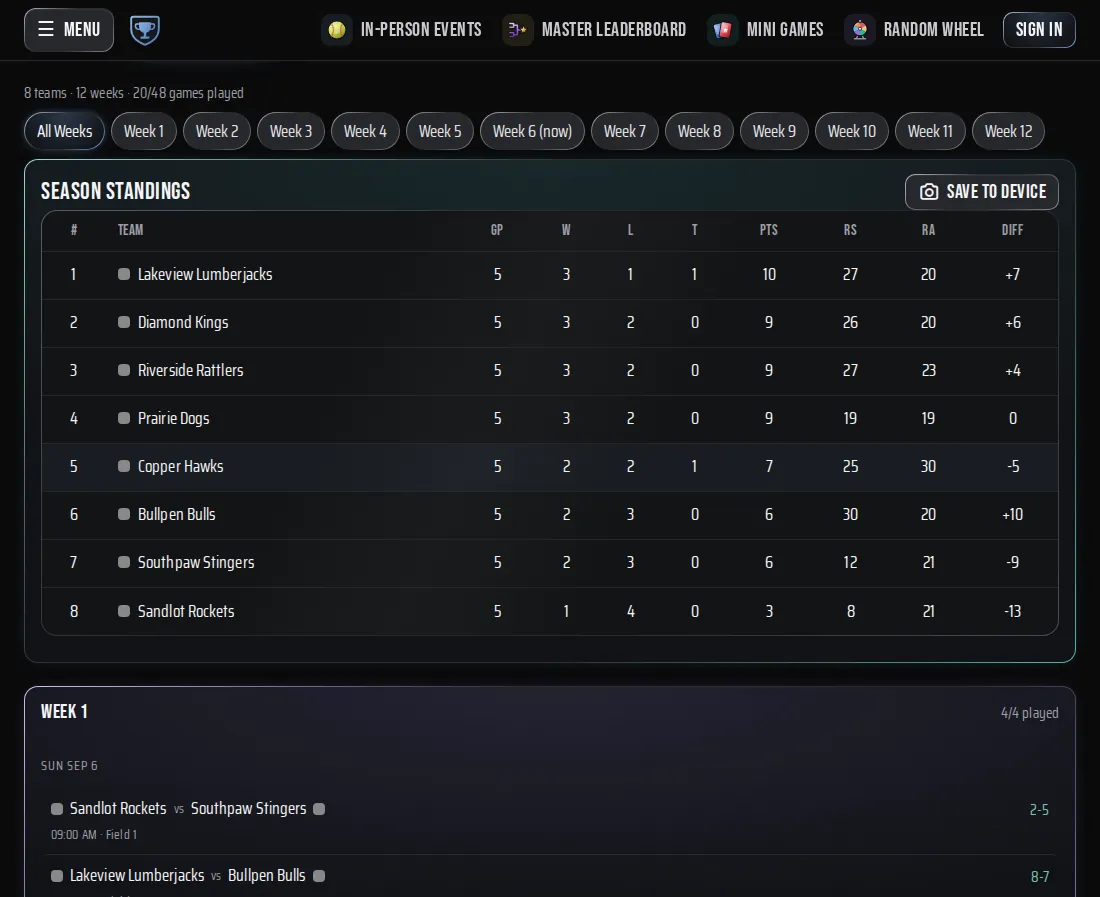
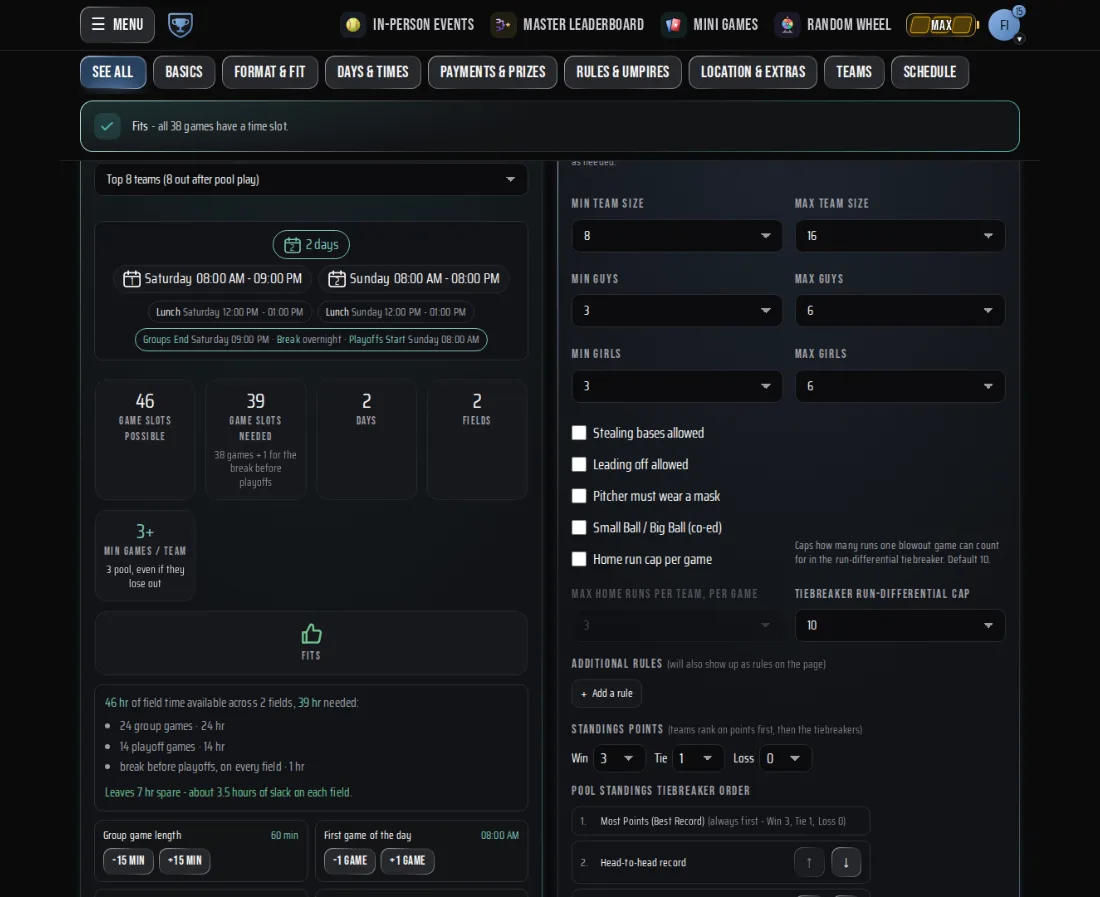
- How ties in the standings are broken, in order.
Book umpires and plan for rain
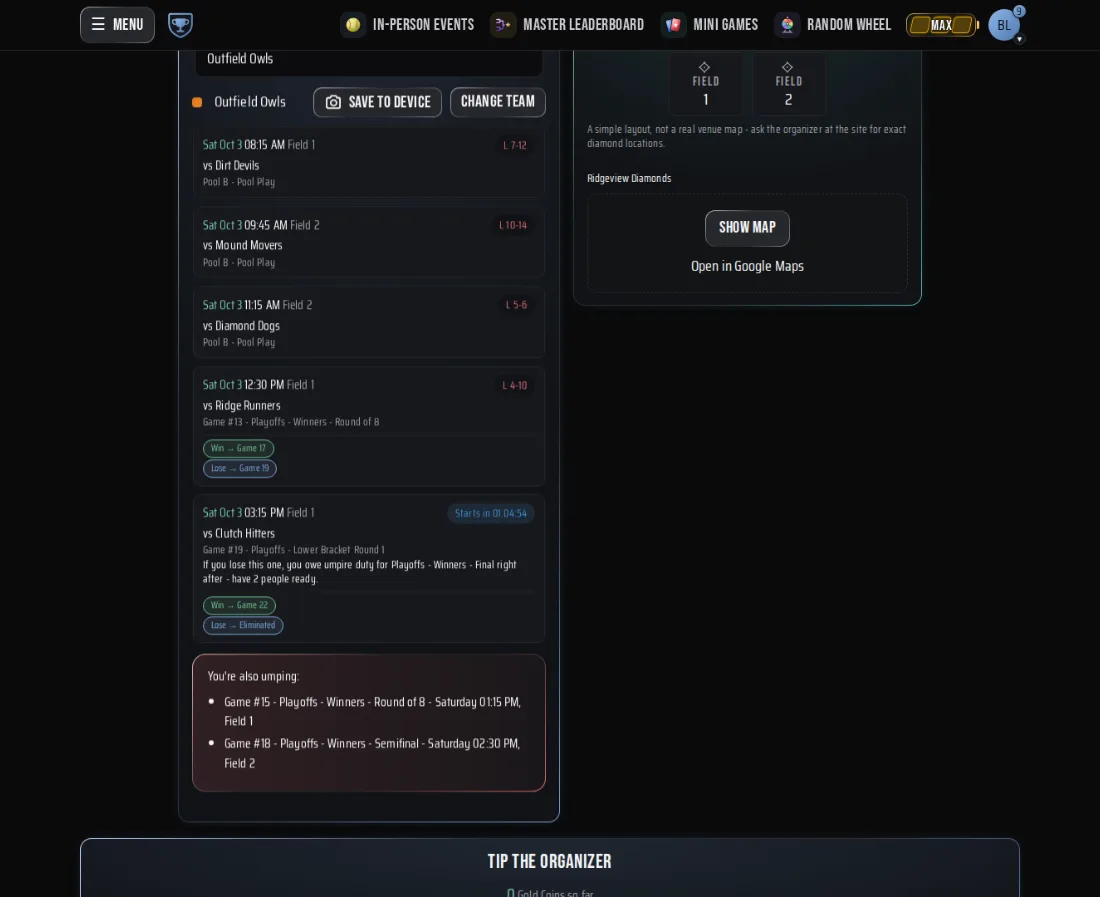
Most tournaments use two umpires a game, one behind the plate and one on the bases. Book them as soon as the fields are confirmed.
Write the rain plan before the forecast forces you to: how short a game can be and still count, which games move first, and how a pool is decided if it cannot be finished.
On the day
- Arrive early, walk the fields, and confirm the field numbers match the schedule.
- Hold a short coaches and umpires meeting on the rules, especially time limits and pitching.
- Get scores in as each game ends so the standings are always current.
- Post one announcement for anything that changes, on the same link everyone already has.
- Check standings and tiebreakers once before the playoffs, then let the bracket fill in.